Ghazala Hashmi Makes History as First Muslim Woman Elected Lieutenant Governor in U.S.
Virginia Democrat Ghazala Hashmi breaks barriers as the first Muslim and South Asian American to hold a statewide executive office in the United States.
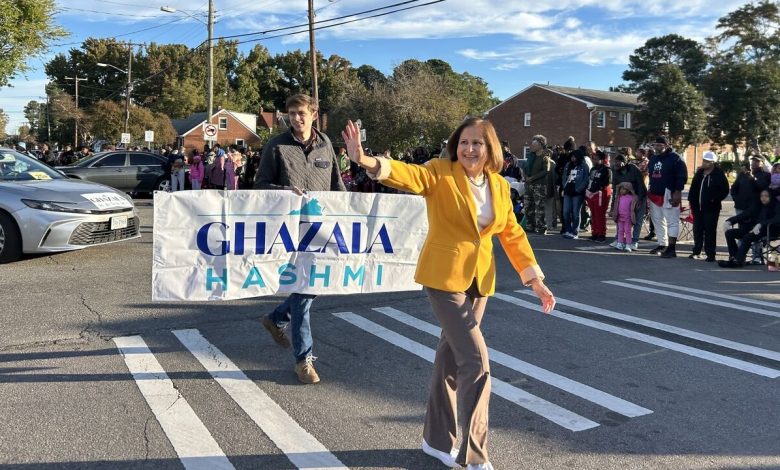
In a groundbreaking moment for American politics, Ghazala Hashmi, a Democrat of Indian origin, made history on November 4, 2025, by becoming the first Muslim elected as Lieutenant Governor of Virginia — and the first Muslim woman ever to hold a statewide executive office in the United States.
Her victory, achieved after a hard-fought race against conservative talk show host John Reid, symbolizes not just a political milestone but a cultural and social transformation in American democracy. Hashmi won 55.6% of the vote, outperforming Reid’s 44.1%, in a state that elects its lieutenant governor independently from the governor — one of only 17 states to do so.
Early Life and Family Roots
Born on July 5, 1964, in Hyderabad, India, Ghazala Hashmi grew up in an academically driven family. Her father, Professor Zia Hashmi, earned law degrees in India and a PhD in International Relations in the United States, while her mother, Tanzeer Hashmi, was a law graduate.
At just four years old, Ghazala migrated to the U.S. with her mother and older brother, joining her father in Georgia, where he was completing his doctorate. Growing up in the American South during the era of school desegregation, she witnessed firsthand the importance of dialogue, inclusion, and social equity — values that would later define her political life.
She excelled academically, graduating top of her high school class, and received multiple scholarships to pursue higher education. She earned a B.A. in English from Georgia Southern University and a Ph.D. in American Literature from Emory University in Atlanta.
Hashmi married Azhar Rafique, with whom she has two daughters, Yasmin and Noor.
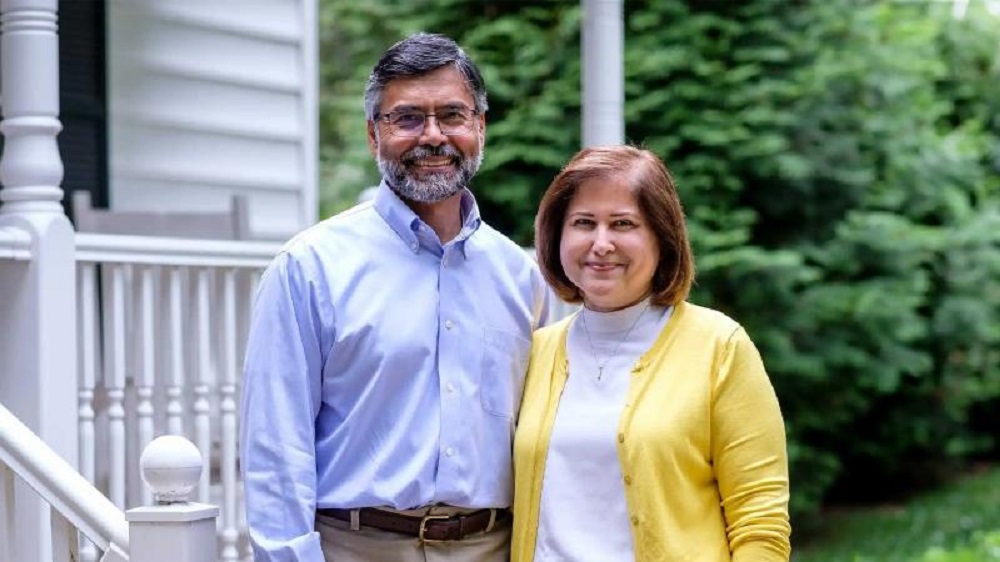
Academic and Professional Journey
In 1991, Hashmi and her husband settled in Richmond, Virginia, where she began a distinguished three-decade academic career. She taught first at the University of Richmond, and later at Reynolds Community College, where she served as the founding director of the Center for Excellence in Teaching and Learning.
Her years in academia brought her into close contact with a diverse student body — veterans, workers, new immigrants, and first-generation college students. This experience, she later said, “opened her eyes to the real challenges Virginians face every day — from affordability and access to education, to racial and economic inequities.”
Political Rise: From Educator to State Senator
Ghazala Hashmi entered politics in 2019, running as a Democrat for the Virginia State Senate from the 10th District, representing parts of southwest Richmond. She defeated Republican incumbent Glen Sturtevant, helping Democrats gain control of the state Senate for the first time in years.
Her win made her the first Muslim and first South Asian American ever elected to the Virginia Senate. In 2023, she was re-elected with a decisive victory over Republican Hayden Fisher, representing the 15th District.
As a legislator, Hashmi championed education, reproductive rights, healthcare access, and environmental protection. In 2024, she became Chair of the Senate Education and Health Committee, a powerful position overseeing two of the most consequential policy areas in Virginia politics.
She also fought to protect voting rights, gun safety laws, and affordable housing, aligning with the Democratic Party’s progressive priorities.
The 2025 Lieutenant Governor Race
Hashmi announced her candidacy for Lieutenant Governor of Virginia in May 2024, running on a platform focused on affordability, education, economic growth, and social justice. She won the Democratic primary in June 2025, defeating Richmond’s former mayor Levar Stoney and State Senator Aaron Rouse.
In the general election, she campaigned tirelessly across the state, emphasizing unity and opportunity, while confronting a strong conservative challenger in John Reid. Despite a tightly contested race, Hashmi prevailed with a commanding lead.
Her victory represents a turning point for Muslim Americans and South Asians in U.S. politics — particularly for women — demonstrating that diverse identities can resonate broadly across electorates.
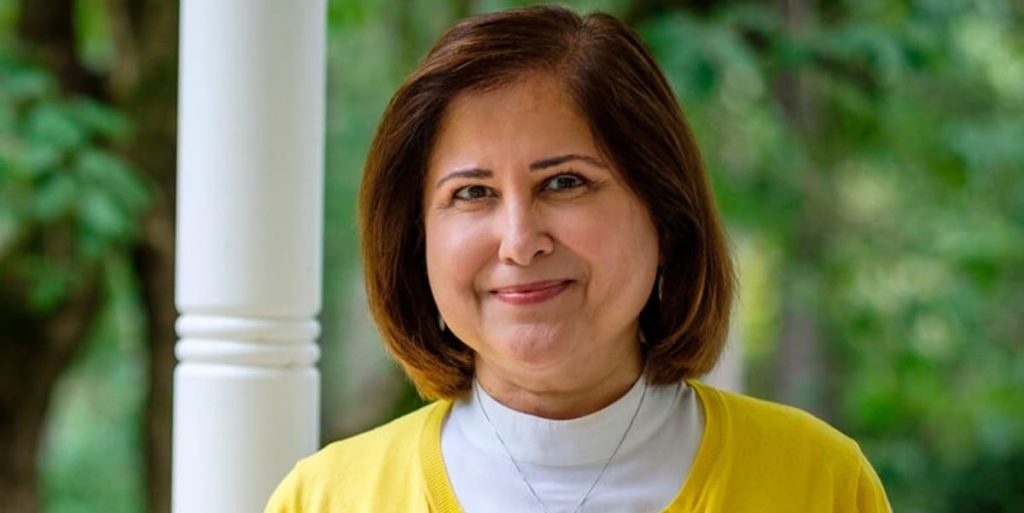
Political Vision and Priorities
As Lieutenant Governor, Ghazala Hashmi has pledged to focus on:
-
Affordable education and workforce training to prepare young Virginians for new industries.
-
Gun control reform, including universal background checks and bans on assault-style weapons.
-
Reproductive freedom and healthcare access.
-
Workers’ rights, including fair wages, union protection, and safe workplaces.
-
Childcare and eldercare support for working families.
Hashmi also advocates for inclusive governance, encouraging civic participation from historically underrepresented communities.
Recognition and Legacy
Throughout her academic and political journey, Ghazala Hashmi has earned numerous honors, including:
-
Legislator of the Year (2025) from the Virginia Education Association.
-
Champion of Justice Award (2022) from the Virginia Interfaith Dialogue.
Her rise from an immigrant child in Georgia to a statewide leader in Virginia reflects both her personal resilience and the evolving face of American democracy.
Conclusion: A New Era of Representation
Ghazala Hashmi’s election as Lieutenant Governor of Virginia is a landmark moment not only for Muslim and South Asian Americans but also for the United States as a whole. Her victory underscores the nation’s growing embrace of diversity, inclusion, and equal opportunity — values she has spent her life teaching and defending.
As she steps into one of Virginia’s highest offices, Hashmi represents a new generation of leaders redefining what it means to belong, serve, and lead in America.