Zahran Mamdani Begins First Day as New York City Mayor with Bold Symbolic Moves and Political Controversy
Newly inaugurated Mayor Zahran Mamdani signals a people-centered, democratic socialist agenda—sparking sharp reactions from Israel, pro-Israel groups, and U.S. political figures.
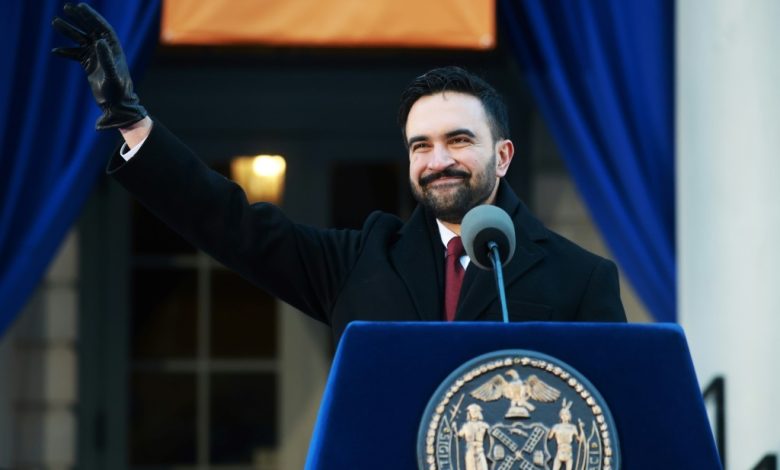
Less than 24 hours after his historic inauguration ceremony in Manhattan amid crowds of supporters, Zahran Mamdani began his first full working day as Mayor of New York City with symbolic gestures carrying clear political messages. These moves reflected the contours of his populist, democratic socialist approach—and simultaneously triggered a wave of angry reactions from Israel and pro-Israel Jewish groups.
According to the Associated Press, the 34-year-old mayor left his modest one-bedroom apartment in Queens, which he shares with his wife, and walked to the subway station, choosing public transportation over an official car on his first day in office.
Dressed in heavy clothing to withstand the bitter cold and visibly battling a cold, Mamdani was accompanied by a camera crew. He repeatedly stopped to greet neighbors who wished him well.
Aboard the Manhattan-bound train, under limited security, the new mayor agreed to take selfies with surprised commuters before settling into a corner seat to review briefing materials for his first day. When two French tourists doubted his identity, Mamdani introduced himself as “the new mayor of New York City” and showed them a copy of the New York Daily News featuring his photo on the front page.
While riding the subway is not unprecedented for New York City mayors—Eric Adams, Bill de Blasio, and Michael Bloomberg all did so—images of Mamdani spread rapidly on social media. Supporters viewed them as a visual fulfillment of his inaugural pledge that his administration would “look like and live like the people it represents.”
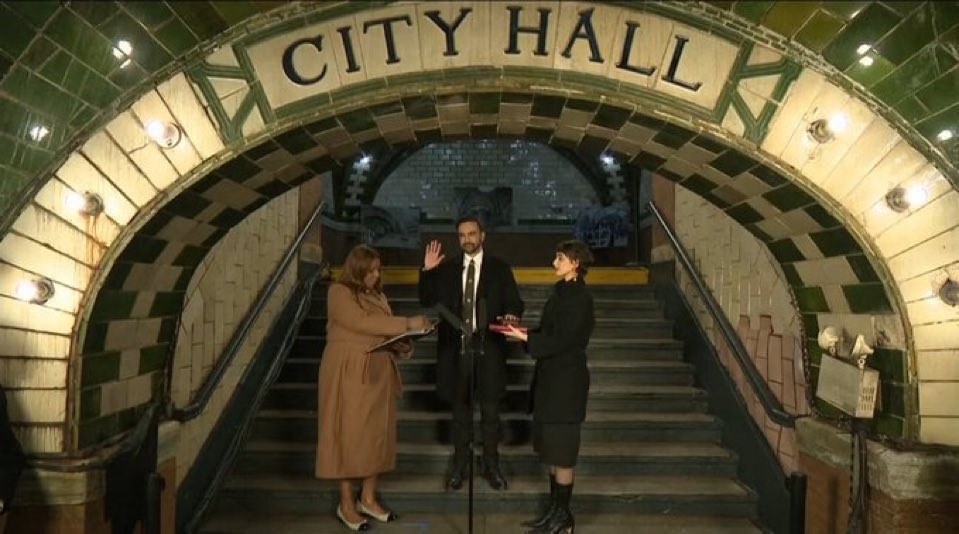
First Actions and Political Signals
Upon arriving at City Hall, Mamdani immediately began his duties by signing executive orders, announcing initial appointments, and answering reporters’ questions, surrounded by supporters and passersby eager to take photos. In public remarks, he stated:“We have an opportunity to allow New Yorkers to believe again that a local government can work for them… but that belief will not endure without action.”
Just hours later, Mamdani continued sending political signals by traveling directly from his inauguration to a residential building lobby in Brooklyn, where he was welcomed by a tenants’ union with enthusiastic chants. There, he reaffirmed his commitment to intensifying legal action against negligent landlords—delivering on a core campaign promise related to rent reduction and housing reform.
Reversing Adams’ Orders and Igniting Controversy
The most controversial move came when Mamdani revoked a series of executive orders issued by his predecessor, Eric Adams, in the final months of Adams’ term—an effort Mamdani described as giving his administration a “clean slate.”
According to Reuters, the repealed orders included decisions made after Adams was federally indicted in 2024 over allegations of illegal campaign donations. Among them was an order allowing federal agents, including immigration officers, to operate offices inside Rikers Island jail—a decision later struck down by the courts.
Mamdani also rescinded orders promoted by Adams as measures to combat antisemitism, most notably one adopting the International Holocaust Remembrance Alliance (IHRA) definition of antisemitism, and another barring city agencies and employees from boycotting or divesting from Israel.
Mamdani justified the reversals by saying the orders were issued amid a “growing loss of trust” in city government. He pointed to September 26, 2024—the date Adams was indicted—as a turning point when public confidence in city leadership’s ability to prioritize the public interest was shaken.
Israeli Anger and Divided Reactions
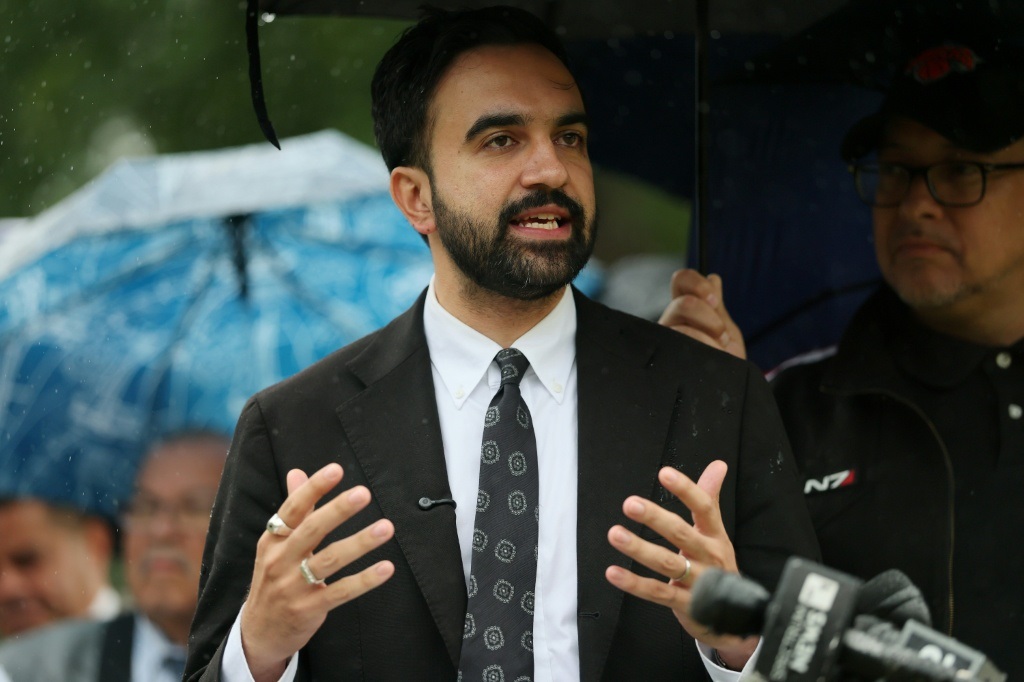
The cancellation of Israel-related orders prompted swift and furious reactions. Israel’s Foreign Ministry posted on X accusing Mamdani of “revealing his true face,” arguing that abandoning the IHRA definition and lifting restrictions on boycotts of Israel was “not leadership, but pouring fuel on the fire of antisemitism.”
Pro-Israel Jewish groups similarly accused the new mayor of encouraging hatred, while official Israeli accounts claimed he had “poured antisemitic gasoline onto an already burning fire.”
Mamdani, however, defended his decisions, insisting that his administration would lead “relentless efforts” to combat hatred and division. He emphasized that he retained the Mayor’s Office to Combat Antisemitism and committed to continued funding for hate-crime prevention programs, making the protection of Jewish New Yorkers a central pillar of his policies.
He also announced the creation of a new “Office of Public Engagement” aimed at expanding public participation in city politics—an extension of his grassroots campaign strategy.
Support for Palestinians and Clash with Trump
Mamdani, a prominent figure on the Democratic Party’s left wing, is known for his outspoken support for the Palestinian cause and criticism of Israel—positions that have made him a frequent target of antisemitism accusations, which he firmly rejects. Islamic organizations, including the Council on American-Islamic Relations (CAIR), argue that the IHRA definition has repeatedly been used to silence advocates for Palestinian rights.
On the national stage, Mamdani has also clashed with President Donald Trump over immigration policy. This followed an April ruling in which a U.S. judge dismissed charges against Eric Adams at the Justice Department’s request, citing concerns that the case distracted Adams from cooperating with the Trump administration’s intensified deportation efforts.
A Turbulent Start for an Unconventional Mayor
Zahran Mamdani’s first day was not merely an administrative beginning but a politically charged moment—marked by symbolic gestures of people-centered governance, a clear democratic socialist agenda, and early confrontations over highly sensitive issues, including Israel, immigration, antisemitism, and social justice in America’s largest city.