New York City’s New Administration Unveils a Bold Strategy to Tackle Street Homelessness
Why NYC Is Moving Away from Encampment Clearances Toward Housing-First and Community Safety Solutions.
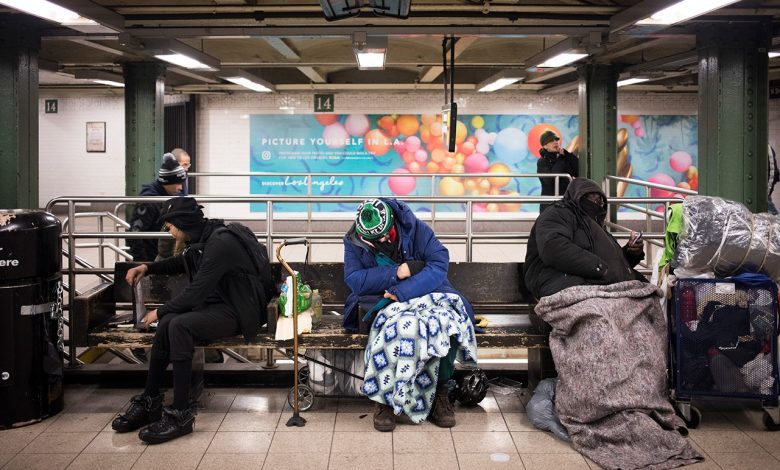
As the new administration prepares to assume office on January 1, confronting the growing homelessness crisis on the streets of New York City has emerged as one of the most urgent challenges it faces. The incoming leadership has outlined a new vision to address this complex issue through a different approach, moving away from previous strategies that drew heavy criticism for their effectiveness and their impact on vulnerable populations. The focus is now on comprehensive solutions aimed at connecting individuals to stable housing and essential support services.
For many years, New York City has struggled with persistent street homelessness, a challenge that affects both those experiencing it and the broader community. Data from previous administrations highlight the limitations of existing approaches, particularly the widespread practice of clearing homeless encampments.
Records show that between January 2024 and June 2025, more than 4,100 such operations were carried out, displacing nearly 6,000 people from public spaces. Despite these intensive efforts, only a small fraction—around 260 individuals—agreed to move into temporary shelters, and notably, none were successfully connected to permanent housing solutions.
These figures underscore a fundamental flaw in the current system, where people are often moved from place to place without addressing the root causes of their homelessness. Advocates for the homeless have consistently voiced strong opposition to these operations, describing them as traumatic and ultimately unproductive tactics. They argue that such measures merely relocate individuals, trapping them in cycles of instability rather than providing meaningful assistance.
While some business owners have supported encampment removals, citing concerns about public safety and keeping sidewalks clear, a broader consensus among experts points to the urgent need for a more comprehensive approach. Policy analysts believe that encampment clearances can only be effective if—and only if—the city simultaneously implements strong mechanisms to connect chronically homeless individuals with appropriate housing and comprehensive support services.
Liz Glazer, founder of a prominent nonprofit research center, emphasized the need to shift from reactive crisis management to proactive, solution-oriented strategies. She noted that the current operating model is driven by immediate problems rather than sustainable solutions, stating: “It can’t be that we either have no encampments or encampments everywhere. Right now, we’re operating in crisis mode, not solutions mode.” This perspective highlights the importance of a clearly defined and accountable system.
The new administration has pledged a major reassessment of existing practices. One of the key initiatives is the creation of a new Department of Community Safety. This department will be tasked with coordinating homelessness outreach and providing appropriate responses to individuals experiencing mental health crises—a role that has historically, and often inappropriately, fallen to law enforcement agencies. Specialists within this new department will guide homeless New Yorkers through various housing options, ensuring they receive personalized assistance.
Other innovative proposals include converting vacant commercial spaces owned by public transit authorities into hubs offering vital medical services to homeless residents. Additionally, the plan calls for deploying specialized outreach workers inside subway stations to engage with individuals in high-risk environments.
The administration also intends to conduct a comprehensive review of all existing crisis programs, committing to expand those that effectively use peer-based outreach—programs led by individuals with lived experience of substance use or homelessness, offering invaluable empathy and understanding.
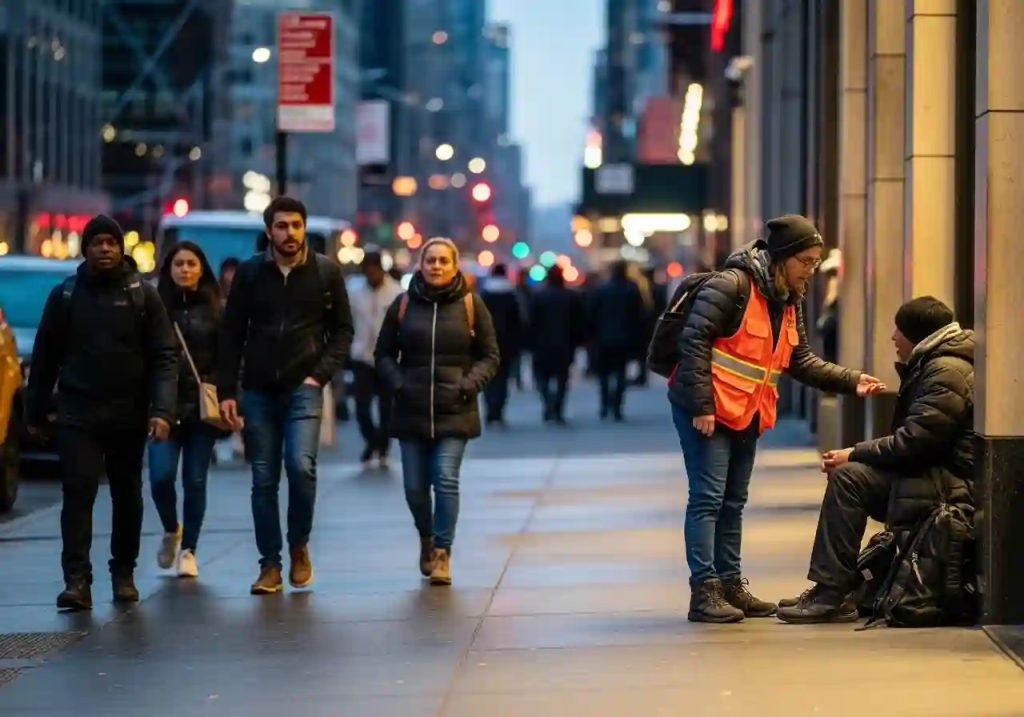
A recent report from the nonprofit research center reinforced the incoming leadership’s key recommendations. The report called for a dual focus: maintaining public spaces for their intended use while ensuring that every person living on the streets has access to housing and necessary services.
It also stressed the urgent need for a single accountable leader to oversee and streamline the city’s currently fragmented and complex approach to homelessness, which is spread across multiple agencies and numerous nonprofit organizations. Such accountability would ensure measurable progress and better-coordinated interventions.
The worsening situation is reflected in a sharp rise in public complaints. Data show that 311 calls related to homelessness more than tripled between 2019 and 2024, with over 82,000 such calls recorded last year, largely concentrated in a small area of Manhattan.
Despite New York’s strong right-to-shelter laws—which help ensure beds for most who seek them, resulting in only about 3% of homeless individuals sleeping on the streets (the lowest proportion of any major U.S. city)—street homelessness is unfortunately increasing. The annual count revealed that approximately 4,500 people slept outdoors this year, a notable increase from the previous year.
The new administration’s commitment to ending ineffective practices and genuinely connecting individuals with supportive environments offers a hopeful new chapter in the city’s ongoing efforts to address this profound social challenge. The incoming leadership has made it clear that complacency is unacceptable, and that the goal is to provide a warm, stable place for every New Yorker in need.