Trump Announces $12B Aid Package to Support U.S. Farmers Amid Tariff Pressure
New rescues aim to ease crop price drops, but critics warn funds favor large farms.
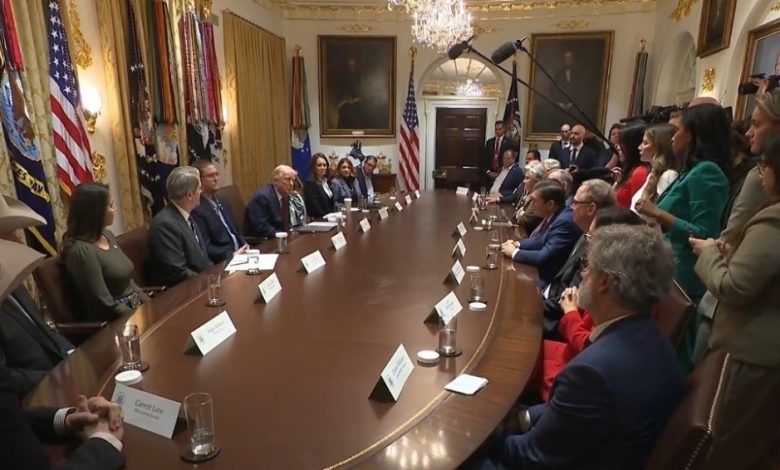
President Donald Trump announced today, Monday, a $12 billion aid package in an attempt to ease economic pressure on the agricultural sector and support farmers affected by tariffs.
According to The Hill, Trump said, speaking from the Cabinet Room at the White House alongside government officials, lawmakers, and farmers: “I am pleased to announce that the United States will take a small portion of the hundreds of billions of dollars we receive in tariffs.”
He added: “What we are doing is taking a relatively small part of that and giving it to our farmers,” describing farmers as “the backbone of our country.”
Trump and the Farmers
The aid includes $11 billion in one-time payments to crop farmers as part of the U.S. Department of Agriculture’s farmer support program. The remaining $1 billion will be allocated to crops not covered by the program.
Trump announced the package in the presence of Treasury Secretary Scott Bessent and Agriculture Secretary Brooke Rollins at a White House event attended by soybean, corn, rice, cattle, potato, sorghum, and cotton farmers.
White House spokesperson Anna Kelly said in a statement before the event: “Today’s announcement reflects the president’s commitment to helping our farmers, who will receive the support they need to close the gap created by Biden’s failures and the successful policies of the president now being implemented.”
Farmers and rural communities played a major role in Trump’s victory in last year’s election, something the president pointed out during the announcement, saying: “We love our farmers, and as you know, farmers love me,” referring to voting trends. According to the Pew Research Center, Trump won 69% of rural votes in 2024.
Criticism of Biden
The package is the latest effort by the administration to support farmers harmed by tariffs and falling crop prices.
Trump said of farmers: “They do not want handouts; they just want a level playing field. I have seen that with farmers more than anyone.”
He blamed former President Biden for the economic problems farmers face. Trump, using his nickname for Biden, “Sleepy Joe,” said: “He crushed our farmers with the worst inflation in modern history, burdensome energy and water restrictions, and many other necessities for farmers.” He added: “What they did to farming in terms of blocking production was absolutely unacceptable.”
Trump also announced he would move to remove environmental regulations on companies that manufacture tractors and other large farming equipment.
He said: “We will give tractor companies—John Deere and all the equipment manufacturers—exemptions from many environmental restrictions on machinery. It’s ridiculous.”
Agreement With China
To further help farmers, Trump announced in October that China had agreed to purchase soybeans, sorghum, and “other agricultural products” during his meeting with Chinese President Xi Jinping in South Korea.
Rollins said last week that the administration would announce a bridge payment for farmers this week. Bessent said Sunday that China has fulfilled its part of the agreement, but that a short-term rescue plan remains necessary.
Bessent said: “We will work on creating this bridge because agriculture is about the future, and we must begin funding agriculture next year, when things are really good.”
Trump expressed optimism about future cooperation with China, saying at the White House Monday that he recently spoke with Xi about the issue: “China, as you know, buys enormous amounts of soybeans. I think they will deliver even more than promised, and they promised a lot. So we’re very happy about that.”

Criticism of the Aid Package
However, critics claim the package is likely to benefit larger and wealthier farms.
Anne Schechinger, Midwest Director for the Environmental Working Group, a nonprofit organization, said: “The Trump administration had an important opportunity to change that, but instead chose to send more money to large farms and corporations, increasing the burden on small farms, which suffer the most under the president’s trade policies.”
She added: “These bailouts are a direct result of the trade war the president himself launched with China, which drastically reduced our largest soybean market, and now forces taxpayers to support the biggest players rather than the farmers most in need.”
In a memo sent to reporters before Trump’s remarks, the Democratic National Committee described the aid package as a “bailout plan” and a temporary fix.
Libby Schneider, Deputy Executive Director of the DNC, said: “Trump has made it clear that he cares more about helping his billionaire friends than helping ordinary Americans. Farmers do not want handouts; they want their markets back, and this plan does not even come close to repairing the damage caused by Trump’s trade war.”