Abbas Wahab Brings Immigrant Comedy and Sudanese Identity to the Philadelphia Stage
From engineering expectations to the comedy stage, Abbas Wahab uses humor to explore immigrant life, race, and belonging
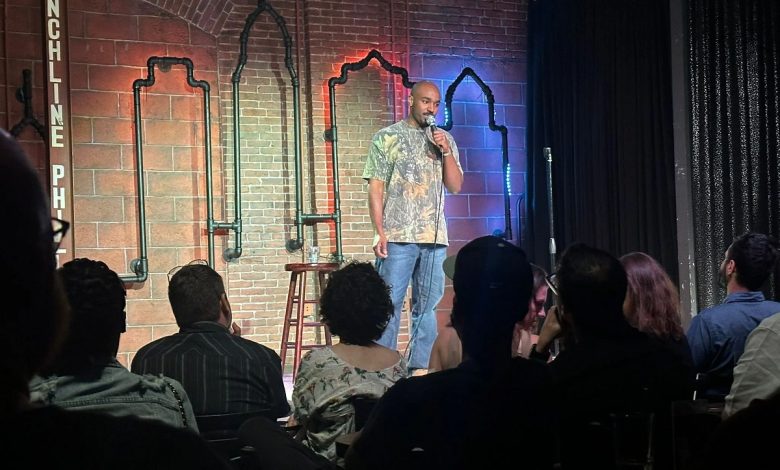
Sudanese-Canadian comedian Abbas Wahab has built a stand-up career rooted in the contradictions of immigrant life—where humor becomes a way to navigate identity, expectation, and belonging.
Wahab moved from Sudan to Canada with his family at the age of six. From an early age, comedy was his language. He was the class clown, memorizing stand-up routines at home and retelling them to friends at school. Yet despite his natural talent, comedy was never presented as a real option.
In a Sudanese immigrant household, success followed a narrow definition. Careers in medicine or engineering were seen as the only respectable paths, while artistic ambition was often dismissed as impractical or irresponsible.
“The standard is medicine or engineering,” Wahab said. “Anything else feels like failure.”
As expected, Wahab pursued engineering. He studied the field, moved to the United States, and worked in the automotive industry. His professional achievements brought pride to his family, but they left him creatively unfulfilled.
Like many children of immigrants, Wahab describes being sold a dream of stability at the cost of self-expression. Eventually, the pressure became impossible to ignore. He began performing stand-up comedy at night while continuing his engineering work during the day.
His early experiences on stage were humbling. Short sets, tough crowds, and quiet rooms tested his confidence. But the setbacks only sharpened his resolve.
When Wahab told his family he wanted to pursue comedy seriously, they were skeptical. To them, engineering represented certainty—comedy, risk. Their doubts persisted until his work began reaching wider audiences through viral clips and unexpected commercial opportunities, moments that slowly shifted perceptions back home.

Facing Challenges and Embracing Identity
Even as his visibility grew, Wahab continued to face challenges. Some shows struggled to draw crowds, forcing him to choose between cancellation and persistence. He chose the latter, viewing every performance as an investment rather than a verdict.
“Every show teaches you something,” he said. “There’s no shortcut.”
Wahab’s comedy tackles themes many performers avoid. He speaks openly about immigration, Islamophobia, marriage, fatherhood, and the absurdities of everyday life, blending social critique with warmth and self-awareness. His humor often disarms audiences before confronting them with uncomfortable truths.
“My job is to tell the truth in a way that makes people laugh,” he explained.
One recurring theme in his work is the experience of being a Black Arab—a position that places him at the intersection of multiple stereotypes. Rather than soften those realities, Wahab leans into them, using irony and observation to expose contradictions in how race and identity are perceived.
Over time, Wahab has also reclaimed a part of himself he once tried to hide: his Sudanese identity. As a child, he avoided speaking Arabic in public, fearing that difference would make him stand out. Like many immigrants, he learned early that blending in felt safer than embracing who he was.
Only in recent years has that shifted. Wahab now proudly centers his heritage in his comedy, often acknowledging Sudanese communities and drawing from shared cultural experiences. What once felt like a liability has become one of his greatest creative strengths.
He sees himself as part of a growing Sudanese diaspora entering creative industries and challenging long-held expectations.
“These voices weren’t considered traditional,” Wahab said. “But they’re going to define what creativity looks like in the next decade.”
For Wahab, comedy is more than entertainment—it is a way of reconciling past and present, honoring where he comes from while shaping where he is going. Through humor, he claims space for stories that were once told only in private, now shared openly, one laugh at a time.
On August 13, Sudanese-Canadian comedian Abbas Wahab took the stage at Punch Line Comedy Club in Philadelphia’s Fishtown neighborhood, delivering an hour-long set that explored immigrant life, cultural contradictions, and family expectations with sharp humor and honesty.