Tatreez Embroidery Workshop in South Philly: Preserving Palestinian Traditions
Building community and honoring generations of Palestinian women through needlework.
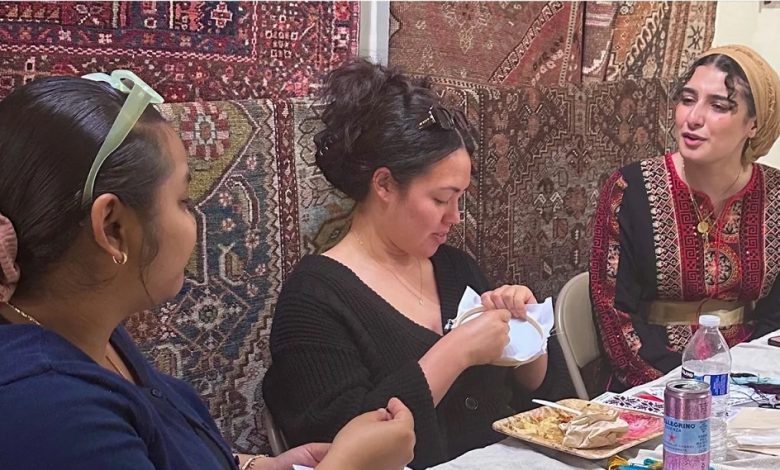
A dozen women gathered on Passyunk Avenue in South Philadelphia to explore tatreez, the traditional Palestinian embroidery style, during a workshop at the Minimal Chaos Souk. The event was organized by Samar Dahleh, a 25-year-old Palestinian American from Springfield, PA, as part of growing efforts to preserve this heritage craft in the diaspora.
Originally from Tulkarm in the West Bank, Dahleh began learning tatreez in 2022 as a hobby. She quickly turned her passion into a mission: educating others about the cultural and historical significance of Palestinian embroidery while keeping the tradition alive.
Tatreez: A Stitch in History and Resistance
The workshop began with a presentation on tatreez history and the meanings behind its motifs. Dahleh explained how traditional patterns evolved into forms of political expression, with Palestinian women stitching hidden messages into their thobs (traditional dresses).
“It was always a form of passive storytelling,” Dahleh said. “Women used colors and patterns to share their life stories, where they were from, whether they were married or had children, and their hopes. After the Nakba, it became a symbol of resistance—a way to preserve history and heritage.”
Dating back 3,000 years to the Canaanites, tatreez became a defining symbol of Palestinian identity in the 19th century. Motifs and colors vary by region: thobs from Gaza often feature waves, reflecting the Mediterranean, while Ramallah embroideries highlight olive branches, symbolizing roots and peace. Southern Palestinian designs incorporate cypress trees, sometimes inverted and paired with missiles, representing resilience and hope amidst adversity.
“These patterns show the struggles Palestinians face,” Dahleh said. “But they also reflect enduring life and resilience—the story women want to tell through their dresses.”
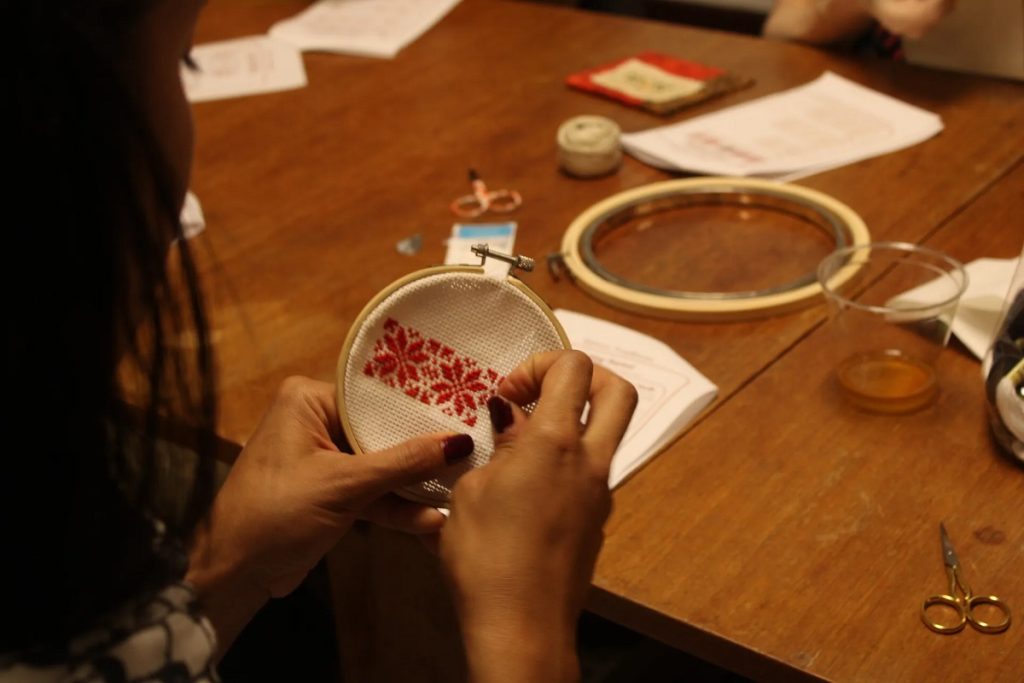
Preserving Palestinian Heritage: Tatreez Workshops Bring Embroidery to Life in Philadelphia
Regional disparities in resources shaped motif styles as well. Ramallah’s relatively affluent communities produced colorful and intricate embroidery, while Tulkarm, Dahleh’s hometown, favored minimalist designs. “Women historically used whatever materials were available, making beauty out of simplicity,” she explained.
While tatreez is primarily associated with thobs, it also appears on wallets, handbags, hairpieces, and home decor. Dahleh emphasizes the communal aspect of the craft: “Tatreez is meant to be done together, like the khaltos (aunties) used to—chattering, stitching, and enjoying tea.” Workshop participants shared conversation and laughter over embroidery and Middle Eastern mezze provided by Philly Hummus Girl.
Attendees, including Irish resident Nicola Bell and third-generation Syrian American Rebecca Saadeh Nelson, praised the workshop for its cultural insight and personal connection. Sarah Naji, Syrian-American owner of the Souk, noted, “The most amazing thing is seeing how many non-Arabs showed up today. It’s wonderful to see people appreciate our history and culture.”
Dahleh’s ongoing workshops aim to build a self-sustaining tatreez community—a space where participants can connect, honor generations of Palestinian women, and pass on this living tradition.
“Tatreez is more than a craft,” Dahleh said. “It’s cultural preservation. We must continue telling the stories of our predecessors. That is how we keep our history alive.”