Arab American Identity in the United States
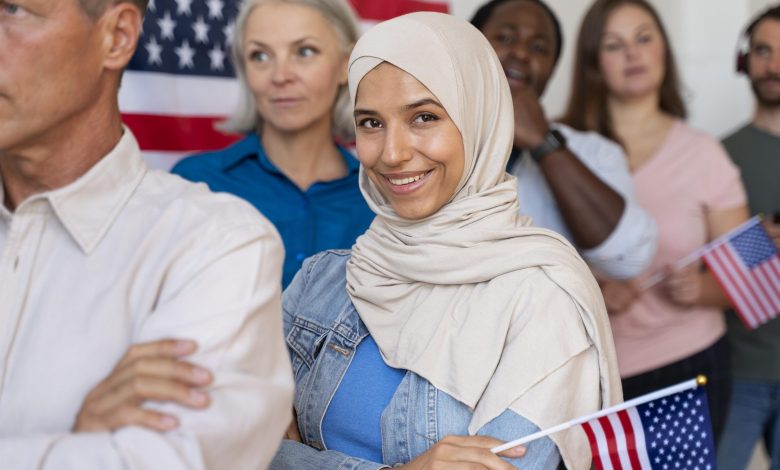
Arab Americans are Americans of Arab ethnic heritage, tracing their roots to the 22 Arabic-speaking countries of the Middle East and North Africa. This diverse community has a rich history and a growing presence in the United States. Below, we explore key facets of Arab American identity – from demographics and immigration history to settlement patterns, socioeconomic trends, political affiliation, and issues of minority status and census classification.
Demographics Overview
Population Size: Arab Americans constitute a significant ethnic community in the U.S. According to the 2020 census, roughly 2.6 to 2.8 million Americans identified as having Arab ancestry (via write-in responses)
. However, advocacy organizations estimate the true number of Arab Americans to be around 3.7 million, accounting for undercounts in official data
. The majority of Arab Americans today are U.S.-born citizens – over 85% are American citizens
– reflecting generations of community establishment.
National Origins: Arab Americans come from a variety of national backgrounds. The largest groups by ancestry are:
- Lebanese Americans – the single biggest Arab origin group (around 685,000 identified in 2020)
- Egyptian Americans – the second largest group (around 397,000)
- Syrian Americans – a sizable community (well over 100,000)
- Palestinian Americans – well over 100,000
- Iraqi Americans – well over 100,000 as well
- Other Arab nationalities – including sizable Moroccan, Jordanian, Yemeni, and Sudanese communities, among others
In fact, Arab Americans have ancestral ties to every Arab country, though a majority trace their roots to Lebanon, Egypt, Syria, Palestine, or Iraq
. This diversity spans different religious and cultural backgrounds, as Arab Americans may be Muslim, Christian, Druze, or other faiths, mirroring the pluralism of the Arab world.
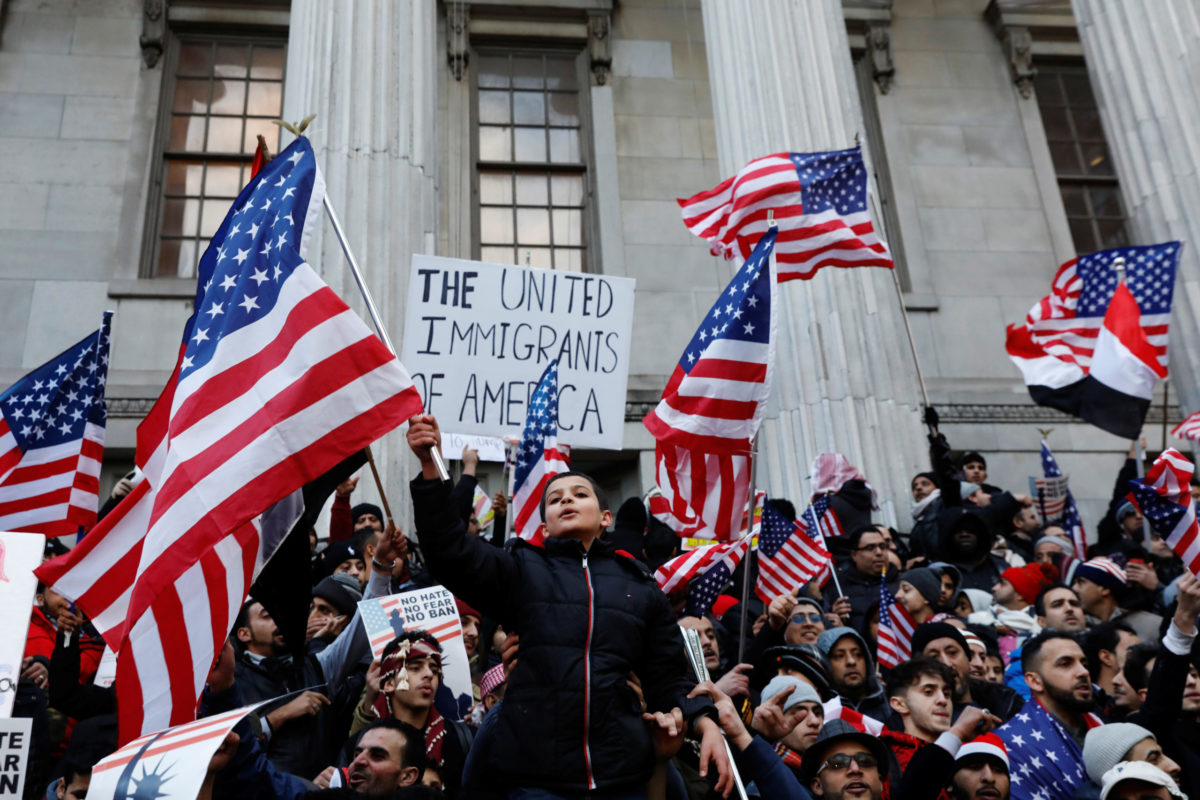
Immigration History
Early Arrivals (Late 19th – Early 20th Century): The first significant wave of Arab immigration to the U.S. began around the 1880s. Between roughly 1880 and 1924, an estimated 95,000 immigrants from the Arab world (mostly from “Greater Syria,” i.e. present-day Lebanon, Syria, Palestine, and Jordan) came to America
. These early Arab immigrants were predominantly Christian peasants and merchants from the Ottoman Empire seeking economic opportunity and escape from hardship. Many were Lebanese/Syrian Christians, who became peddlers or factory workers in their new country. By 1900, small Arab enclaves could be found in many states, from New York and Michigan to North Dakota, as these newcomers fanned out as traveling salesmen
. This early migration slowed after World War I and was nearly shut down by the Johnson-Reed Immigration Act of 1924, which imposed strict national quotas favoring Western Europeans
. From 1924 until 1965, Arab immigration dropped to only around 1,000 or fewer arrivals per year
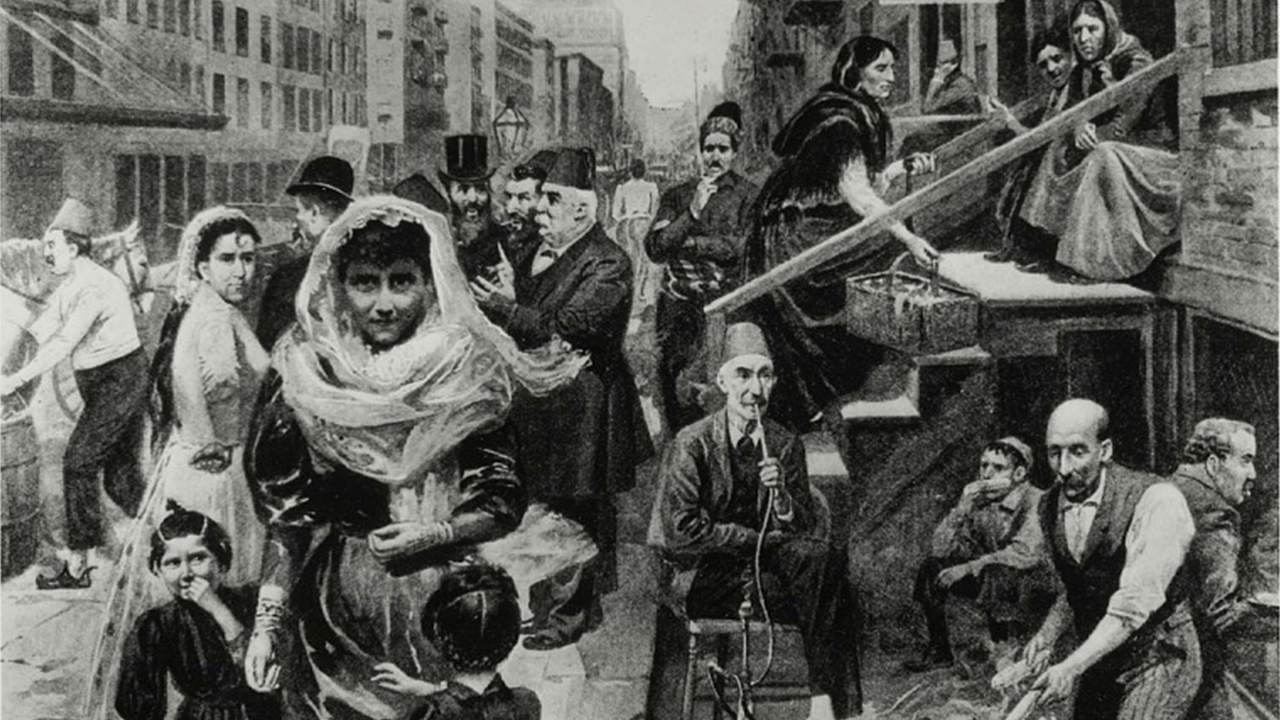
Mid-20th Century Changes: Even during the exclusion era (1924–1965), there were notable exceptions. U.S. immigration policy made some room for special cases, such as students and highly skilled professionals, as well as refugees. For example, in the 1950s the U.S. admitted a limited number of Arab refugees: about 2,000 Palestinian refugee families were allowed in under the 1953 Refugee Relief Act, with additional Palestinian families in the late 1950s and early 1960s fleeing the upheavals following the creation of Israel
. During the same period, Cold War-era programs attracted Middle Eastern doctors, engineers, and scientists. This “brain drain” brought educated individuals from countries like Egypt, Syria, Jordan, Iraq and Lebanon to America in the 1950s and early 1960s
Post-1965 Wave: U.S. immigration laws opened up dramatically with the Hart–Celler Immigration and Nationality Act of 1965, which abolished the old quota system. This sparked a large new wave of Arab immigration from late 1960s onward. Between 1966 and 1990, approximately 400,000 people immigrated to the U.S. from Arab countries
. Many of these immigrants were family members reuniting with earlier migrants, students and professionals seeking opportunity, as well as refugees fleeing conflicts. Notably, the Lebanese Civil War (1975–1990) drove many Lebanese (Muslim and Christian alike) to relocate to the U.S.
. The later decades of the 20th century also saw increased immigration from Egypt (often for graduate studies or skilled jobs), Palestinian displacement continuing from the Middle East conflict, and newcomers from countries like Yemen and Morocco. By the 1980s, Arabs from North Africa (Morocco, Sudan, etc.) and the Gulf were also arriving in greater numbers, diversifying the Arab American panorama.
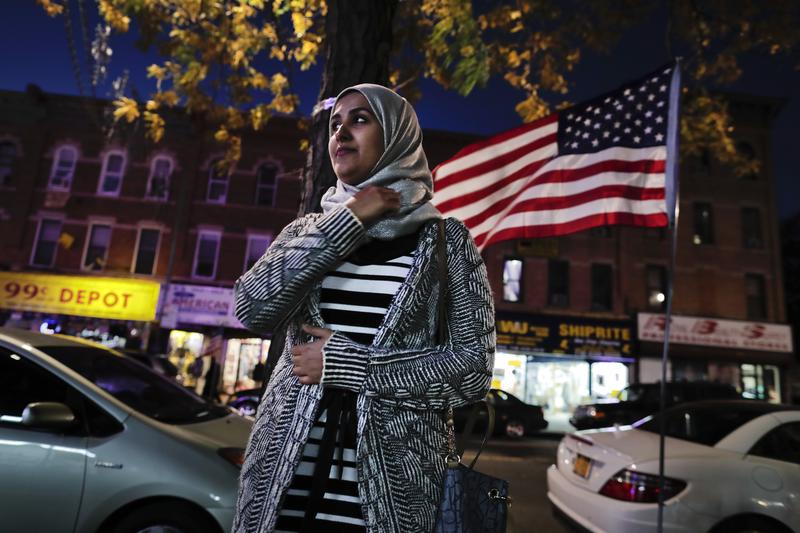
1990s to Present: The fourth major phase of Arab immigration spans the 1990s through the early 21st century. This era has been marked by turmoil and refugee flows from the Middle East – including some conflicts in which the U.S. was directly involved. Significant numbers of Iraqi immigrants and refugees arrived in the 1990s (after the First Gulf War) and 2000s (after the 2003 Iraq War), joining an existing Iraqi-American community. More recently, smaller numbers of Syrian and Yemeni refugees have been admitted as a result of civil wars in those countries during the 2010s. However, Arab immigration in the 21st century also faced new obstacles. In the aftermath of the September 11, 2001 attacks, immigration from predominantly Muslim countries came under intense scrutiny. Strict security screening (such as special registration for male nationals of Arab and Muslim-majority countries) made the process more onerous
. In 2017, a temporary “travel ban” policy further sharply reduced immigration and travel from several Arab countries
. (That ban was lifted in 2021, allowing arrivals to resume.) Despite these challenges, tens of thousands of Arab immigrants continue to come to the U.S. each year, contributing to a steadily growing community
Settlement and Assimilation
Geographic Concentration: Arab Americans reside in all 50 states, but their population is concentrated in certain regions. Nearly 95% of Arab Americans live in or around major cities
. The top metropolitan areas with large Arab American communities are New York City, Detroit (and its suburb Dearborn), Los Angeles, Chicago, Washington D.C., and Minneapolis–St. Paul
. Additionally, almost 75% of the nation’s Arab American population lives in just a dozen states. The largest states by Arab American population include California, Michigan, New York, Texas, Florida, Illinois, New Jersey, Ohio, Virginia, Massachusetts, Pennsylvania, and Minnesota
. For instance, Southern California and the New York/New Jersey area have long-standing Arab enclaves, while Michigan’s Detroit/Dearborn area has one of the densest Arab American concentrations (with a large Lebanese, Iraqi and Yemeni heritage community dating back over a century). These communities often feature Arab restaurants, markets, churches and mosques, contributing vibrant “Little Arabia” neighborhoods to the urban landscape.
Community Life and Integration: Generations of Arab Americans have worked to normalize their lives in the U.S., balancing cultural heritage with American society. By and large, Arab Americans are well integrated: many are fluent in English, with the second and third generations often speaking little Arabic compared to their immigrant grandparents. Rates of citizenship and home ownership have grown over time, indicating deep roots. In fact, just over half of Arab Americans today are native-born, and most of the rest have been in the country for decades
. Arab American families place strong emphasis on education and entrepreneurship (as discussed further below), which has aided socioeconomic mobility. Culturally, Arab Americans have established numerous community organizations, festivals, and institutions to share their heritage – from Arab churches and Islamic centers, to cultural festivals and Arab student associations at universities. These institutions help newer immigrants adjust and allow the community to celebrate traditions (like Arab American Heritage Month each April) while being part of the American mosaic.
Challenges and Discrimination: Assimilation has not come without difficulties. Especially during times of international conflict or terrorism, Arab Americans have faced prejudice and suspicion. For example, after the September 11, 2001 attacks, many Arab (and Muslim) Americans experienced a sharp increase in harassment, discrimination, and even violence in their daily lives
. There were reports of racial profiling by law enforcement, workplace discrimination, vandalism of mosques, and other hate incidents directed at those perceived to be Arab or Muslim
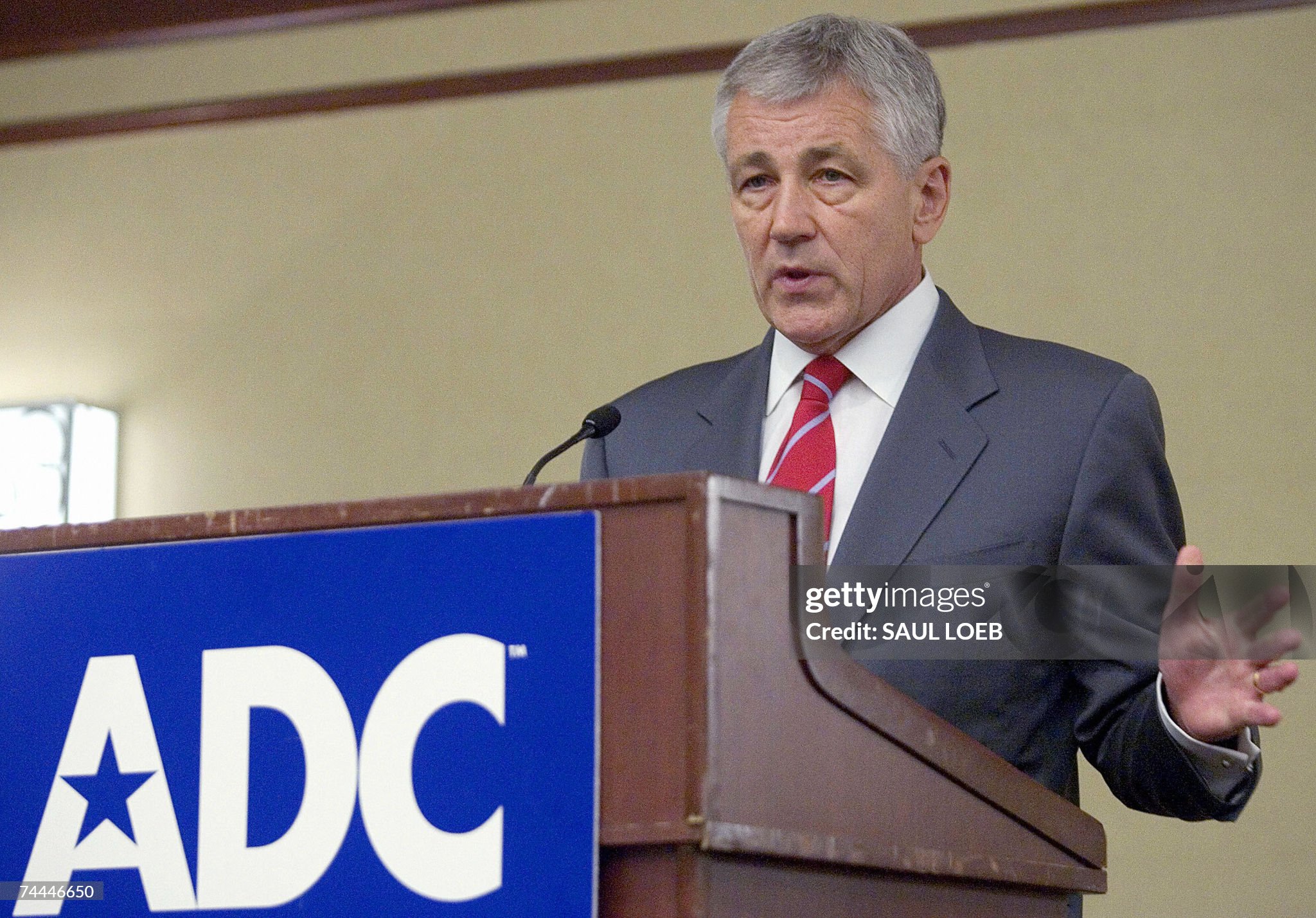
. This backlash created a climate of fear for some families, even those who had lived in America for generations. Arab Americans have responded by increasing civic engagement and advocacy. Organizations like the ADC (American-Arab Anti-Discrimination Committee) and CAIR (Council on American-Islamic Relations) have worked to protect civil rights. Over time, many Americans have grown more informed and accepting of Arab Americans, but stereotypes and biases still linger. Nevertheless, the community’s overall trajectory has been one of resilience and gradual acceptance. Today, Arab Americans are represented in virtually all walks of American life – they serve in the U.S. military, hold public offices, lead businesses, and have made notable contributions in arts, science, and public service. Their adaptation is an ongoing story of striving for the American Dream while preserving a proud heritage.
Education and Socioeconomic Trends
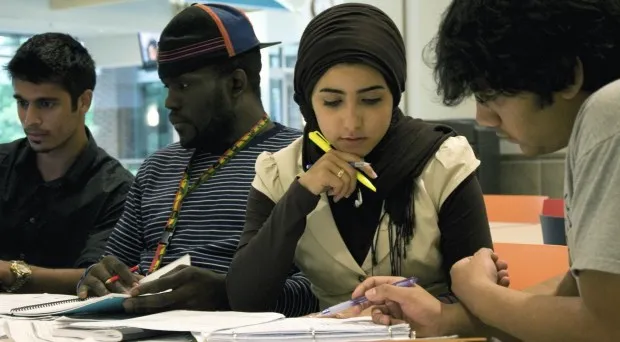
Educational Attainment: Arab Americans as a group tend to be highly educated, reflecting the community’s emphasis on schooling and professional careers. Approximately 45% of Arab American adults have a bachelor’s degree or higher, compared to about 33% of the overall U.S. population
. This above-average educational attainment is partly due to the large number of scientists, doctors, and students who immigrated in the late 20th century, as well as the priority immigrant parents place on their children’s education. Many young Arab Americans excel in fields like engineering, medicine, law, and business. The community’s strong educational profile has even led some researchers to label it a “model minority” (though that term is debated)
. Notably, educational levels vary by subgroup: for instance, Lebanese and Syrian Americans (with longer U.S. histories) often have college graduation rates comparable to white Americans, while newer immigrant groups, like some Yemeni or Iraqi refugees who arrived with disrupted schooling, may have lower averages. Overall, however, the second generation tends to attain higher education than the first, indicating significant intergenerational progress.
Income and Occupations: In line with their education, Arab Americans often enjoy above-average incomes and professional status. The median household income for Arab Americans was about $64,000 as of 2019 – slightly higher than the national median (~$61,000)
. Many Arab Americans work in white-collar professions. Around 38% of Arab American workers are employed in management, business, science, and arts occupations (vs ~37% for the U.S. average)
. It’s common to find Arab Americans among the ranks of physicians, engineers, university professors, and entrepreneurs. In fact, the community has a notable entrepreneurial streak: there are over 110,000 Arab-owned businesses across the country, from small grocery stores and restaurants to large companies, collectively generating billions in revenue
. These businesses not only provide livelihoods within the community but also create jobs for others, reflecting a strong economic integration.
Despite generally positive socioeconomic indicators, there are nuances. Poverty does affect a portion of the community – about 16% of Arab Americans live below the poverty line, slightly above the U.S. national poverty rate of 13%
. Economic hardship is more common among recent immigrants and refugees (for instance, some Iraqi and Syrian refugee families initially struggle to establish themselves). For example, within the community, Lebanese Americans (who are often third-generation or beyond) have one of the highest median incomes ($67k), whereas Iraqi Americans (many of whom arrived more recently as refugees) had a lower median around $32k in earlier surveys
. Home ownership rates also lag a bit (around 57% for Arab Americans vs 64% nationally)
, suggesting some face challenges in accumulating wealth. Factors like length of time in the U.S., English proficiency, and credential recognition play a role in these disparities. Still, the overall trend shows Arab Americans closing economic gaps as they spend more time in the country. By the 21st century, Arab Americans collectively are better educated and slightly more prosperous than the U.S. average, even as they continue to tackle inequalities and integrate into new areas of the economy
Common Professions: In terms of Arab American professions, certain fields are notably populated by this community. Medicine is a prominent example – Arab Americans (particularly those of Egyptian, Syrian, or South Asian Arab descent) are well-represented among doctors and pharmacists in the U.S. Likewise, engineering and information technology have attracted many Arab Americans; one can find numerous Arab-origin software developers, aerospace engineers, and researchers (not surprising given the influx of students from countries like Egypt and Jordan in the 1970s and 1980s). Many Arab Americans also work in commerce and small business – owning retail shops, grocery stores, gas stations, and restaurants (the stereotypical “Middle Eastern-run convenience store” has some basis in reality, though the community is far more diverse). Additionally, Arab Americans have made their mark in academia (as professors and scholars), media (journalists, producers), and even entertainment and sports in growing numbers. This occupational diversity underlines that Arab Americans are active in all facets of American economic life, from blue-collar jobs to corporate boardrooms. Still, one unifying trait is a tendency towards entrepreneurship and independent businesses, a reflection of both necessity (historically, immigrants often started businesses when other jobs were closed off to them) and community support networks.
Political Affiliation
Party Alignment and Voting Patterns: Arab Americans are a politically engaged minority, but their political affiliations are not monolithic. Historically, Arab Americans leaned somewhat Democratic in aggregate – especially in the last few decades – but with a substantial minority identifying as Republican or independent. The balance has shifted over time. In the early 2000s, surveys and anecdotal evidence suggested many Arab Americans (particularly Muslim Americans among them) began gravitating to the Democratic Party due to concerns about civil liberties and the Iraq War. By 2016, polls found about 52% of Arab Americans identified as Democrats vs 26% as Republicans
. Similarly, a majority have tended to vote for Democratic presidential candidates in recent cycles. For instance, 59% of Arab American voters supported Joe Biden in 2020
, a reflection of continued Democratic preference in that election.
However, Arab American voting trends are dynamic and can be influenced by pressing issues. In fact, recent polling indicates the community has become more evenly split between the parties. By late 2023, about 38% of Arab Americans identified as Republican and 38% as Democrat, with the remainder independent or undecided
. This was a notable change, possibly driven by dissatisfaction with certain policies of the Democratic administration (especially regarding Middle East foreign policy). Indeed, an Arab American Institute poll in late 2023 showed a hypothetical matchup between a Democratic and Republican candidate resulting in a near dead heat among Arab Americans
– a stark contrast to the roughly 2-to-1 Democratic margin in earlier years. It’s worth noting that religion and nationality can influence partisan leanings too: for example, Arab American Christians (many of whom are of Lebanese or Syrian descent) have historically included prominent Republicans and may lean conservative on some social issues, whereas Arab American Muslims and Palestinians have often leaned Democrat, concerned with civil rights and foreign policy. Generational differences count as well; younger Arab Americans might have different priorities than the older generation of immigrant voters.
Despite fluctuations, one constant is that Arab Americans prize candidates who engage with their community’s concerns. The Arab American vote can be decisive in swing states with concentrated populations (such as Michigan or Florida), so both parties have occasionally courted this group. Arab Americans have also increased their representation in public office – there are Arab Americans in city councils, state legislatures, and even in the U.S. Congress (e.g., Rep. Rashida Tlaib of Michigan, Rep. Darrell Issa of California, etc.), hailing from both parties.
Key Issues for Arab American Voters: The political issues that matter most to Arab American voters tend to be a mix of bread-and-butter American concerns and specific issues tied to their heritage or experience. According to recent surveys, the top issues include: jobs and the economy, foreign policy in the Middle East, healthcare, education, civil rights, and national security. In a 2023 poll, Arab American respondents ranked “jobs and the economy” as their number one issue (39%), followed by the situation in Gaza/Palestine (26%) and gun violence (21%) as other top concerns
. The high priority on the Israel-Palestine conflict (especially after events in 2023) underscores that U.S. policy in the Middle East is not a distant issue for this community – it’s often personal. Many Arab Americans have family in the Middle East or cultural ties that make them attentive to issues like the status of Palestinians, wars in countries like Iraq or Syria, and U.S. relations with Arab nations. Consequently, candidates’ stances on things like a two-state solution, humanitarian aid to conflict zones, or diplomacy in the Arab world can significantly sway Arab American opinion
Domestic issues are equally critical. Economic opportunity is vital – Arab Americans, many of whom are small business owners or professionals, want policies that support small businesses, job growth, and fair immigration laws (to allow family reunification and skilled migration). Civil liberties and discrimination are also key concerns; Arab American voters often favor strong protections against hate crimes, profiling, and policies that uphold religious freedom, given their community’s experiences post-9/11. Issues like healthcare and education frequently rank high as well, similar to other Americans. Notably, Arab Americans have voiced concerns about immigration policy – for instance, opposition to travel bans that target Muslim-majority countries, and support for refugee resettlement programs.
In general, Arab Americans cannot be boxed into single-issue voting, but there are certain themes: they tend to support candidates who promise equitable treatment of minorities (themselves included), who engage constructively in the Middle East, and who address the economic and social needs of their communities. This has often translated into Democratic votes in recent decades, but as mentioned, this alignment is not guaranteed and is subject to change with the political winds. Voter turnout in the Arab American community has historically been strong (some estimates put it around 80% in presidential elections)
, reflecting a high level of civic engagement. Continuing to mobilize younger Arab Americans and addressing their top issues will likely shape the community’s political affiliation in the years to come.
Minority Status and Government Recognition
Official Classification: A unique aspect of Arab American identity is the lack of formal recognition as a distinct category in government statistics. The U.S. does not officially classify Arab Americans as a separate racial or ethnic group. According to federal standards (set by the Office of Management and Budget in 1997), people with origins in the Middle East or North Africa are categorized as “White” for census and demographic purposes
. In practice, this means that an American of Lebanese or Egyptian descent checking race on a census form often ends up being counted in the white population, despite Middle Easterners often not fitting common notions of whiteness
. This classification has been a point of contention. Many Arab Americans do not view themselves as white, and they feel this imposed label masks their true identity and the discrimination they may face

. Additionally, being counted as white means Arab Americans are not counted as a minority group for policy purposes, which can affect resource allocation and political representation (no minority set-asides or targeted support, since on paper the population blends into the majority white category).
Census Representation and the MENA Category: There has been a long-running discussion and advocacy around introducing a MENA (Middle Eastern and North African) category in official data collection. Arab American advocacy groups, such as the Arab American Institute (AAI), have pushed for the U.S. Census to recognize MENA as a distinct ethnic category for decades
. The addition of a MENA checkbox would allow people of Arab, Persian, Turkish, Amazigh, and other MENA heritages to identify themselves in a way that is neither “White” nor “Asian” (the two flawed options many fall into now). This change nearly occurred for the 2020 Census – after considerable research and testing, the Census Bureau was poised to implement a MENA category, but the plan was not finalized in time by the government. As a result, the 2020 Census went ahead without a MENA checkbox, though it did encourage those of Middle Eastern origin to write in their specific ethnicity under the “White” category (e.g., write Lebanese, Syrian, etc.).
Even without a dedicated checkbox, the 2020 Census results provided some illuminating data. In a special data release, the Census Bureau reported that over 3.5 million people in the U.S. identified as having Middle Eastern or North African heritage (alone or in combination)
. Within that, about 2.6 to 2.8 million were specifically of Arab origin (depending on how “Other MENA” responses are counted)
. The largest detailed Arab groups reported were Lebanese (around 685,000 people) and Egyptian (around 397,000), followed by those who just wrote “Arab” or “Arabic” (~239,000)
. Other sizable groups recorded included Syrian, Iraqi, Palestinian, Moroccan, and Jordanian Americans, each with well over 100,000 respondents
. This was the first time the decennial census collected such disaggregated data on Arab Americans – a milestone hailed by community leaders
. However, because it relied on write-ins, community experts believe it still undercounts the true population (many people might skip the write-in or put broad terms). The undercount of Arab Americans due to lack of a check-box has been an ongoing issue, contributing to the gap between official figures and higher community estimates
The movement for a MENA classification is not just about numbers, but about recognition and rights. Arab Americans argue that being counted properly would improve access to federal programs and anti-discrimination protections. For example, health disparities or hate crime statistics affecting Arab Americans could be better tracked if they were visibly identified in data. It would also be a symbolic acknowledgment that Arab Americans are indeed a minority group with a distinct identity. The good news is that progress is being made: as of 2023, the OMB’s racial/ethnic classification standards were under review, with strong recommendations to add a MENA category
. The next census and federal surveys may well include a separate MENA option, thanks to these advocacy efforts. Until then, Arab Americans occupy a somewhat paradoxical place – culturally and politically a minority, but officially categorized as part of the majority.
In the meantime, community organizations continue to encourage Arab Americans to self-identify on forms where possible (for instance, checking “Other” and writing in their ethnicity) to ensure they are counted. The “Yalla Count Me In” campaign in 2020 was one such initiative urging Arabs to write in their heritage on the census
. This push for visibility aims to correct historical oversight. As one Arab American leader noted, people from the MENA region have been “rendered invisible in census data” for too long, and a distinct category is necessary to address this
. Recognizing Arab Americans on the census would be a major step in government recognition of their identity, paving the way for a better understanding of this vibrant community’s size, needs, and contributions to the United States.