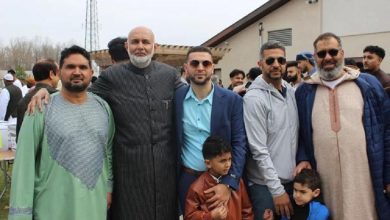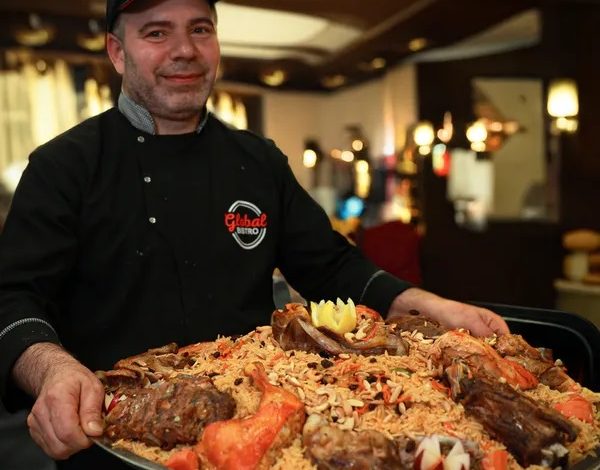
Abdulmueen Mubarak, widely known as Abu Yaman, is a Syrian immigrant whose love for cooking has turned into one of Virginia’s most heartwarming success stories. With over 30 years of experience in the culinary arts, Abu Yaman mastered traditional Syrian recipes long before arriving in the United States.
After immigrating to America in 2016, he began preparing authentic Syrian dishes from his own home, catering for local events, parties, and community gatherings. His flavorful dishes—rich with the aromas of Aleppo’s spices and Damascus-style grills—quickly gained a loyal following among both Arab and American food lovers.
Global Bistro: A Taste of Syria in the Heart of Fairfax
Encouraged by this success, Abu Yaman took a bold step in 2021, opening Global Bistro, the first Syrian restaurant in the city of Fairfax, just a short drive from Washington, D.C. Located at 4401 Village Dr, Fairfax, VA 22030, the restaurant blends traditional Syrian cuisine with a welcoming family atmosphere.
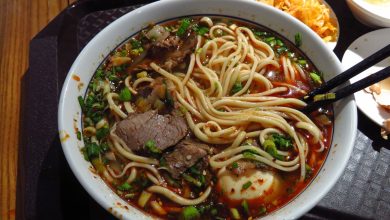
Global Bistro’s menu celebrates the diversity of Syrian cooking—shawarma, kibbeh, fattoush, hummus, and lamb dishes prepared with precision and passion. For Abu Yaman, every plate tells a story of home, heritage, and hope.
When asked about the secret to his success, Abu Yaman emphasizes quality, consistency, and community connection. He believes that building trust with customers and staying true to authentic flavors are the real foundations for any restaurant’s growth in America.
Today, Global Bistro stands as a culinary bridge between East and West, offering guests not only delicious meals but also a taste of Syrian hospitality. Abu Yaman’s story is more than a tale of food—it’s an inspiring example of resilience, hard work, and cultural pride.
Global Bistro
Address: 4401 Village Dr, Fairfax, VA 22030
Phone: +1 (703) 272-3445