Dr. Abdulrahman El-Sayed: How His Michigan Senate Run Reflects America’s New Political Mainstream
Why El-Sayed’s stance on Gaza, corporate influence, and systemic reform is reshaping Democratic politics in 2025.
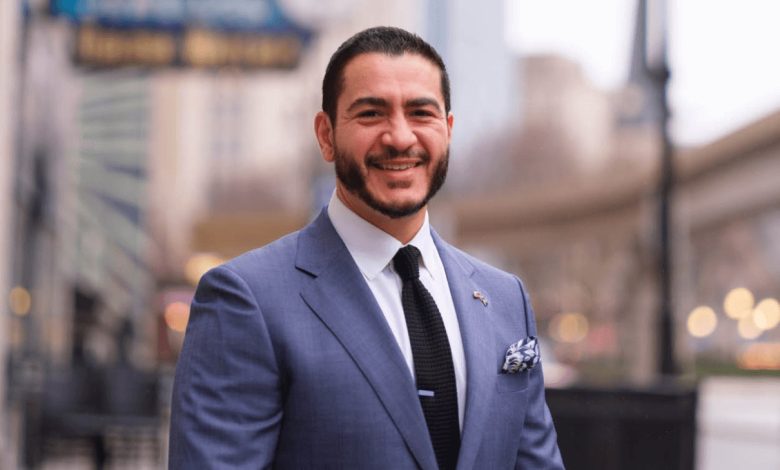
In an American political landscape undergoing profound transformation, the Senate candidacy of Dr. Abdulrahman El-Sayed in Michigan stands as a case study—one that goes far beyond a typical race to fill Senator Gary Peters’ vacant seat. It is a true referendum on the shifting mood within the Democratic Party and among the broader American public regarding Middle Eastern issues, especially the war in Gaza.
El-Sayed, an Egyptian-American politician and epidemiologist who previously led Detroit’s health department, is presenting himself as a distinctly progressive candidate. While his opponents rushed to enter the race, El-Sayed distinguishes himself with a platform that skillfully links “domestic corruption” with “foreign policy.”
From “Controversial” to “Mainstream”
For decades, the Washington political establishment considered criticism of Israel or calls to cut military aid to it as “political suicide” or, at best, “controversial policy.” Some critics attempted to frame El-Sayed this way after he described what is happening in Gaza as a “genocide.”
Yet a closer reading of current realities shows that these critics are increasingly out of touch with the new public mood. What was considered a red line just a few years ago has now become a widely supported public stance—especially among the Democratic base any candidate needs in order to win.
The Numbers Don’t Lie
Declining support for Israel is no longer speculation; it is backed by new polling. According to a major poll by The Economist in August 2025, the balance has shifted:
-
43% of all voters support reducing U.S. military aid to Israel.
-
Among Democrats, this number surges to 58% in favor of cuts, while only 4% want to increase aid.
These numbers point to one conclusion:
A candidate who takes a firm stance against the war and calls for an end to arming Israel—like El-Sayed—is no longer outside the mainstream. He represents “the new mainstream” within the Democratic Party.
Palestine as Part of the Class Struggle
The brilliance of El-Sayed’s campaign lies in its refusal to separate Gaza from the daily struggles of ordinary Americans. His vision centers on “liberating the system” from the grip of wealthy interests—whether that money buys political silence about poisoned water in Flint or silence about the killing of children in Gaza using taxpayer dollars.
Bottom Line
Attempts to portray pro-Palestinian candidates as “radicals” are the last gasps of an aging political guard. The chances of success for candidates like El-Sayed are rising not despite their positions on Israel—but because of them.
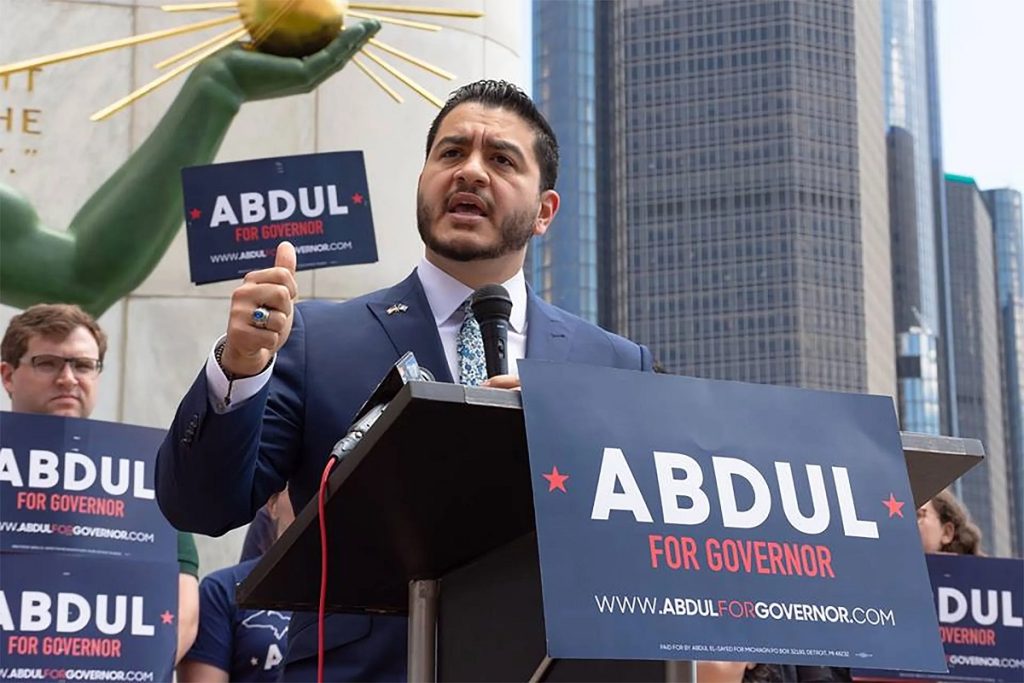
In Brief: Dr. Abdulrahman El-Sayed
An Egyptian-American physician, epidemiologist, and progressive political leader born and raised in Detroit. He holds a PhD in Public Health from Oxford University (as a Rhodes Scholar) and a medical degree from Columbia University. He became nationally known as Detroit’s youngest health director, leading efforts to rebuild the city’s public health system and protect its children from pollution. He ran for Michigan governor in 2018 with the support of Senator Bernie Sanders, later served on President Biden’s healthcare transition team, and now works as a political commentator on CNN, a researcher at Harvard University, and the author of several books, including Healing Politics.