Tunisian Kaskrout Lablabi: A Beloved Street Food Packed With Flavor
How Kaskrout Lablabi Turned a Classic Chickpea Soup Into One of Tunisia’s Most Iconic Sandwiches.
Kaskrout Lablabi is one of Tunisia’s most distinctive and comforting street foods, combining simplicity, warmth, and bold flavors in a single sandwich. Rooted in the famous lablabi, a traditional Tunisian chickpea soup, this popular variation transforms the dish into a filling handheld meal enjoyed across the country.
At its core, kaskrout lablabi is built around slow-cooked chickpeas seasoned with garlic, cumin, and chili, served inside a crusty baguette instead of a bowl. The sandwich is generously enriched with olive oil, harissa, lemon juice, tuna, capers, olives, and a soft or hard-boiled egg, creating a perfect balance of spice, acidity, and richness.
What makes kaskrout lablabi especially beloved is its accessibility. It is affordable, nourishing, and deeply satisfying, making it a staple for students, workers, and late-night diners alike. Vendors across Tunis, Sfax, Sousse, and other cities often customize each sandwich to the customer’s taste, adjusting spice levels and toppings on the spot.
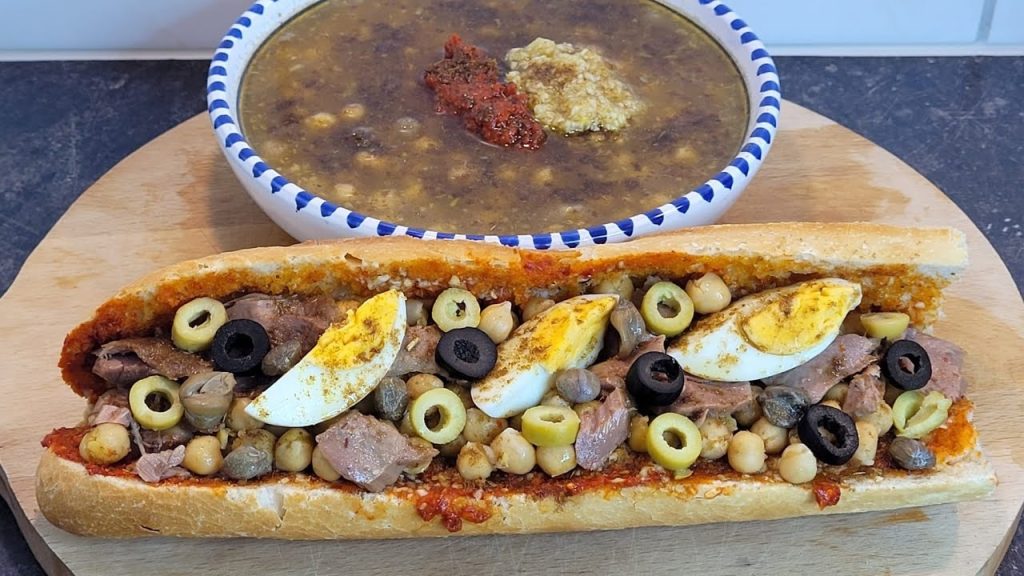
Unlike many modern fast foods, kaskrout lablabi reflects Tunisia’s culinary philosophy: simple ingredients elevated through seasoning and technique. Chickpeas provide protein and fiber, olive oil adds depth and health benefits, and harissa gives the sandwich its unmistakable Tunisian identity.
Over the years, kaskrout lablabi has become more than street food—it is a cultural symbol. It represents warmth in winter, comfort after long days, and the creativity of Tunisian cuisine in adapting traditional dishes to modern urban life. Whether eaten standing at a food stall or enjoyed at home, it remains a timeless favorite that connects generations through flavor.