


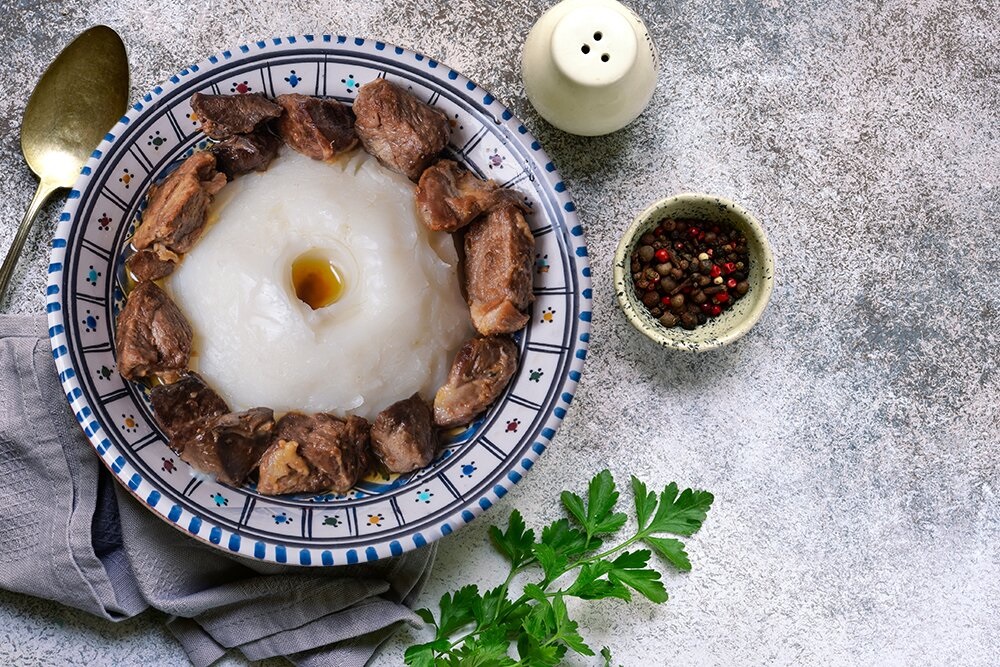
Tunisian Bazin is a traditional North African dish, deeply rooted in Tunisia’s culinary heritage. This unique dish is a type of bread made from barley or wheat flour, often shaped into a firm, dense dough and served with rich, flavorful sauces. Bazin is particularly popular during family gatherings, religious celebrations, and festive occasions, symbolizing hospitality and Tunisian tradition.
Ingredients and Preparation:
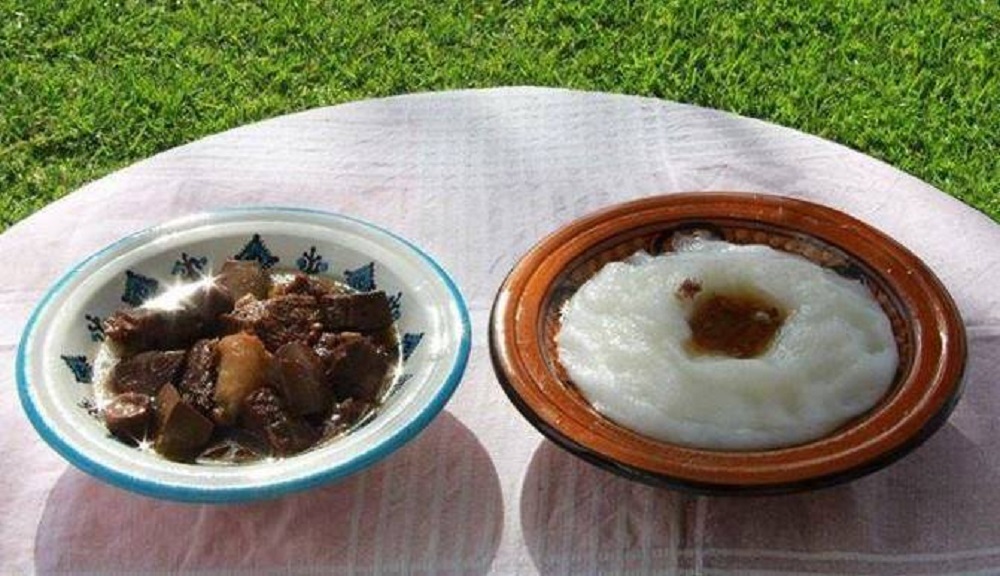
The main ingredient of Bazin is barley flour (or sometimes a mixture of barley and wheat), water, and salt. The preparation involves boiling the flour in water and then kneading it vigorously until it forms a dense, smooth dough. The dough is then shaped into a dome or loaf and served with a spicy meat or vegetable sauce, often flavored with tomatoes, garlic, and Tunisian spices. Olive oil and eggs may be added for extra richness.
Cultural Significance:
Bazin is more than just a meal; it is a representation of Tunisian identity. Traditionally, it is prepared in a communal setting, with family members contributing to the kneading and cooking process. This dish is particularly associated with rural areas and desert regions, where barley has historically been a staple grain. Its hearty nature makes it a beloved dish for both everyday meals and festive celebrations.

Nutritional Value:
Rich in carbohydrates and fiber, Bazin provides lasting energy, making it ideal for long workdays or active lifestyles. Depending on the accompanying sauce, it can also offer protein, vitamins, and minerals. Its simple, wholesome ingredients reflect Tunisia’s emphasis on healthy, locally sourced foods.
Conclusion:
Tunisian Bazin is a versatile and culturally significant dish, combining tradition, flavor, and nutrition. Its firm, hearty dough paired with rich sauces makes it a unique culinary experience, offering a true taste of Tunisia’s rich gastronomic heritage.