


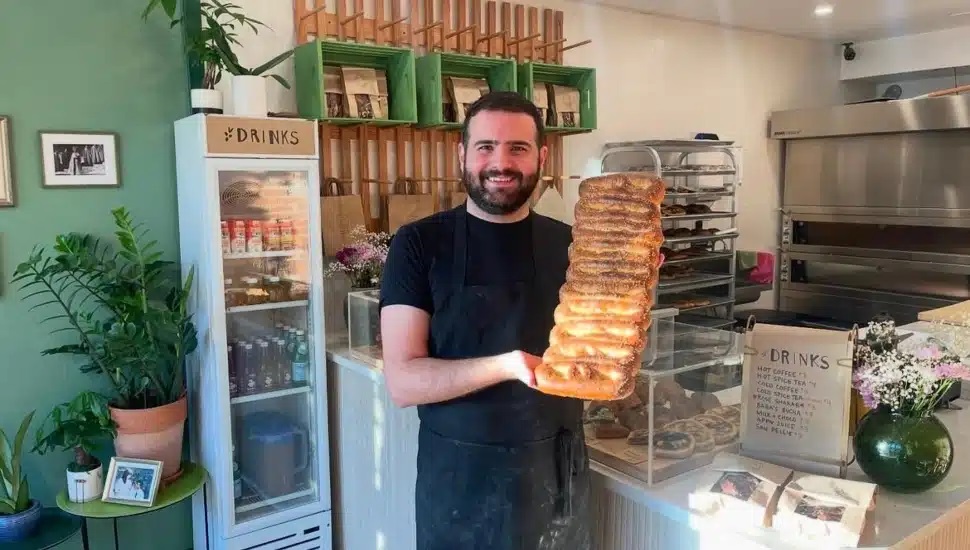
At Majdal Bakery in South Philadelphia, the scent of warm dough drifts from the oven as 29-year-old Kenan Rabah hums along to a Fairuz song. As he kneads and folds flatbreads—techniques he learned as a child—he reflects on a question that has never had a simple answer: Where are you from?
“This is an easy question for most people, but not for us in the Golan Heights,” Rabah says. “Our travel documents say our nationality is ‘undefined.’”
The Golan Heights, a rocky plateau in southwestern Syria, was occupied by Israel during the 1967 Six-Day War and later annexed in 1981—an act widely rejected by the international community. Its population, largely Arab Syrian Druze, has overwhelmingly refused Israeli citizenship in an effort to preserve its Arab identity. Yet because Syria no longer administers the region, it cannot issue passports or official documentation. Many residents are left stateless, suspended in an unresolved legal and political limbo.
Rabah moved to the Philadelphia area in 2015. He enrolled at Walnut Hill College, a culinary school in West Philadelphia, and later worked as head baker at Lost Bread Co. in South Kensington until December 2023. Three months after leaving that role, he began hosting independent pop-up events, serving traditional dishes from the Golan Heights.
“No matter how much professional experience I gained, I always went back to what I learned from my mother,” Rabah says. “That made me want to teach people about the Golan Heights through food.”

In November 2024, that dream became reality with the opening of Majdal Bakery in South Philly. He named it after his hometown, Majdal Shams—one of only five Syrian villages remaining in the Golan Heights after more than 95 percent of the region’s inhabitants were expelled.
Nestled on the foothills of Mount Hermon near the Syrian-Lebanese border, Majdal Shams is known for its apple and cherry orchards. Rabah remembers the calm rhythm of life there, especially during harvest season, when neighbors gathered in the fields together.
“The beauty of the Golan Heights is in the simplicity of its people and the slow pace of life,” he says. “Everyone knows each other. We’re deeply connected.”
Rabah’s passion for cooking began as soon as he could reach the kitchen counter. He spent hours watching his grandmother and mother prepare food, gathering regularly at his grandmother’s home to bake fatayer and ma’moul.
“Those moments shaped my love for cooking,” he says.
At Majdal Bakery, Rabah serves Philadelphia a taste of his heritage—rebuilding an identity fractured by war through history, memory, and tradition.
“I don’t know how to talk politics, sing, or write poetry,” he says. “But I know how to bake. That’s how I tell people where I’m from.”

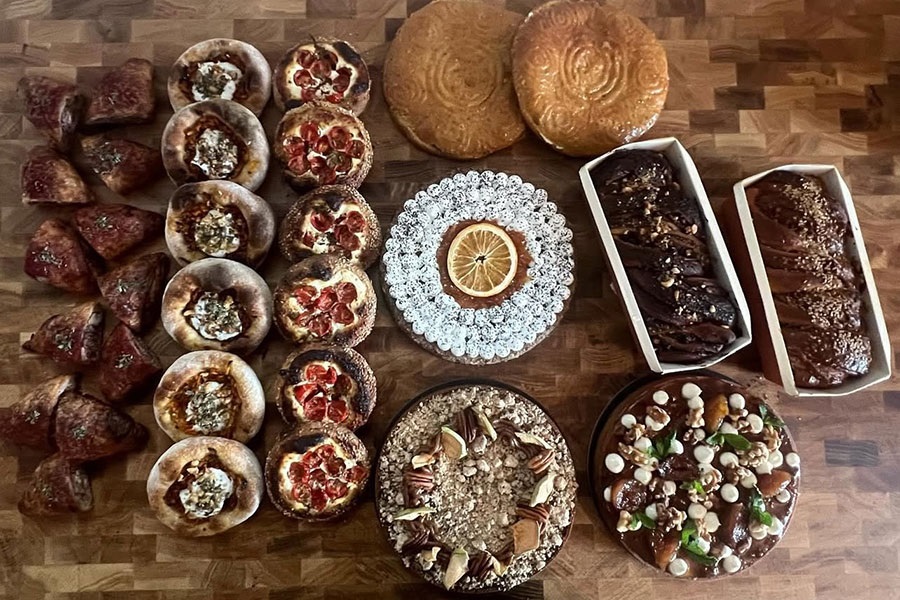
The bakery specializes in flatbreads rooted in Golan Heights cuisine. Rabah prepares potato fatayer just as his mother did, stuffed with potato, onion, and spices imported from Majdal Shams. He also serves talami, a flatbread enriched with olive oil and flavored with anise and turmeric. Other offerings include chicken shawarma, za’atar makdous (thyme and pickled eggplant), lahm baajin with sumac and onion, and his most popular item: carrot and yogurt safeha.
“With every flatbread, I’m sharing a flavor, a story, and a childhood memory,” Rabah says.
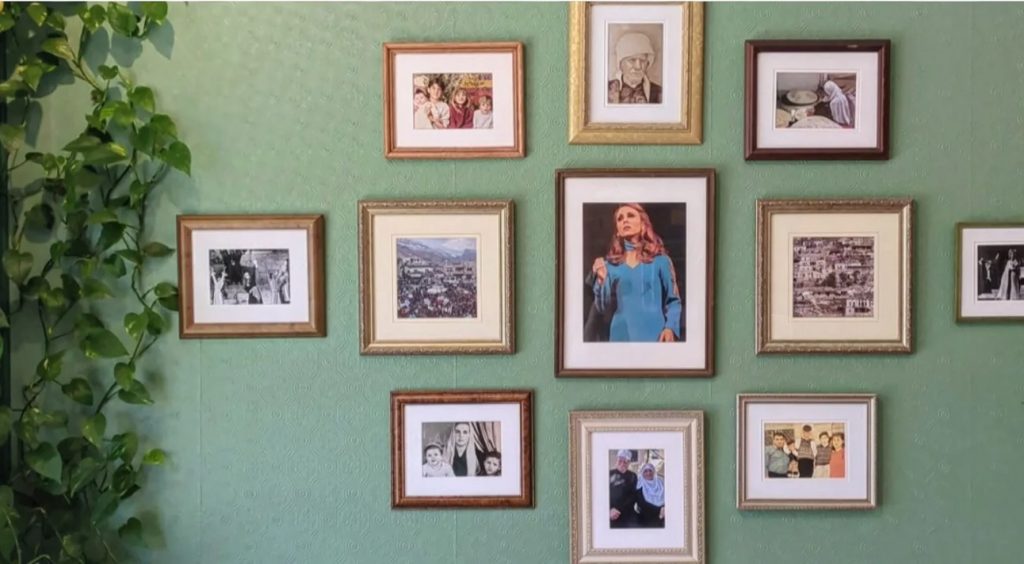
Majdal Bakery has become a neighborhood fixture in South Philadelphia and beyond. Inside, customers are welcomed by a wall of photographs—images from Rabah’s childhood, his parents and grandparents, and his beloved Fairuz.
“I love when people tell me this place reminds them of home,” he says.
Tony Sarkees, a regular customer who moved to Philadelphia from Florida in 2021, had been searching for authentic Syrian food. He describes Majdal’s flavors as “next level.”
“When you eat here, you feel cared for,” Sarkees says. “You can tell the food is made to nourish you. That feeling is rare.”
Through the bakery, Rabah has met Arabs from across the region for the first time. Due to the Golan Heights’ political status, most Arab countries—including Syria—do not accept Israeli travel documents issued to Golan residents. Before arriving in Philadelphia, Rabah had never interacted with many other Arab communities.
“I was surprised by how much we share culturally,” he says. “I’ve made so many friendships.”

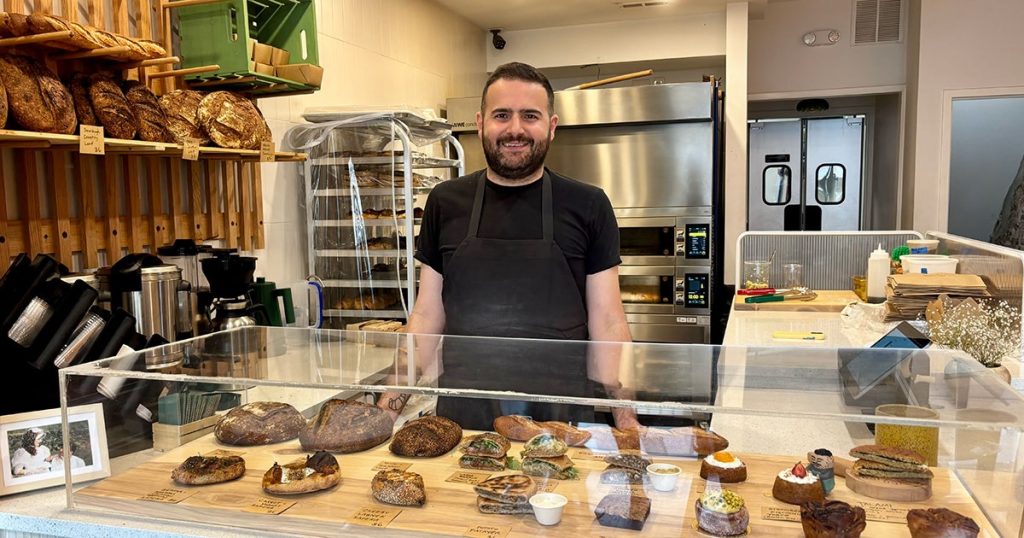
He also credits Philadelphia’s culinary community for its generosity and collaboration. “The success of one is the success of all,” he says.
While Rabah hopes to expand Majdal Bakery by hosting community events and growing the menu, his mission remains unchanged.
“I never want to grow so much that I can’t bake with my own hands,” he says. “I always want the dough between my fingers—and the chance to tell people about Majdal Shams. To exist, to share our stories, is an act of meaning in itself.”