


New York’s political landscape has long been shaped by successive waves of immigration and by ethnic and religious communities that carved out their place in the collective identity of the city known as “the Big Apple”—from the Irish and Italians to Jewish and African communities.
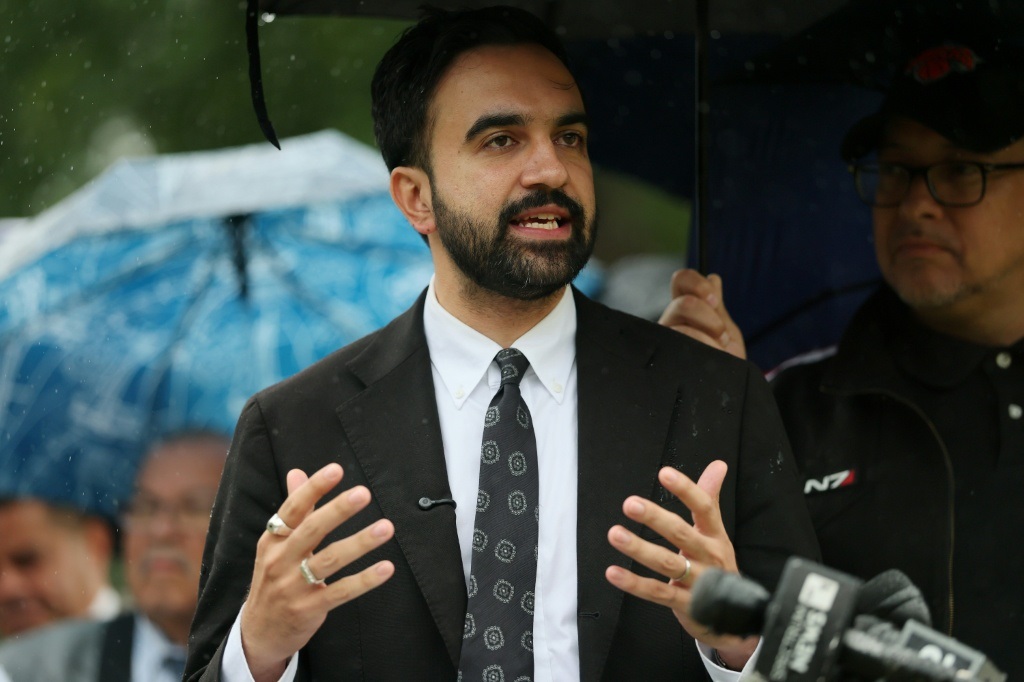
However, the 2025 elections marked an unprecedented demographic and political shift. With the inauguration of Zohran Mamdani as the city’s first Muslim mayor and the first of South Asian descent, the Muslim community is no longer merely a statistic in population counts. According to The Washington Post, it has become a central driving force and a backbone of municipal power.
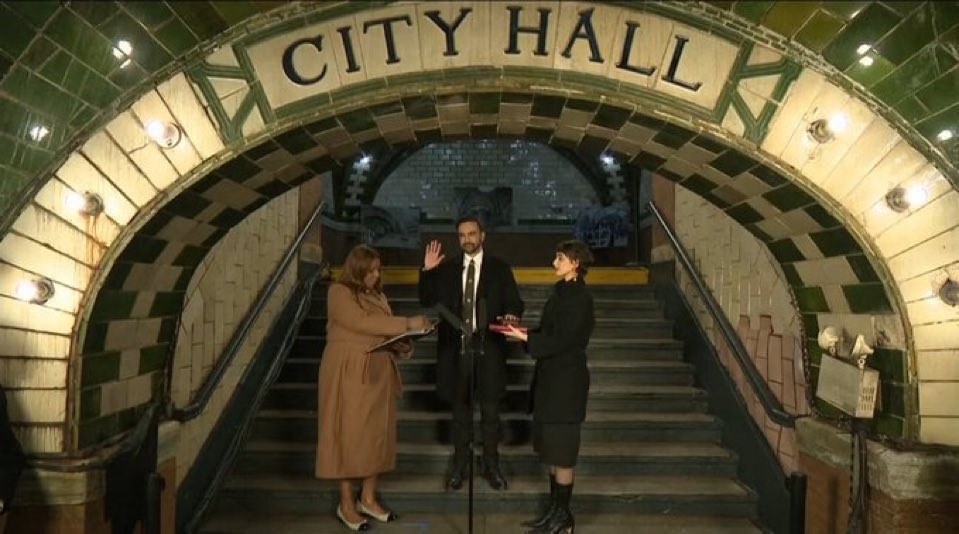
Mamdani took the oath of office on the Holy Qur’an in the early hours of the New Year during a private ceremony held inside the old City Hall subway station, built in 1904, attended only by family members and close associates.
In his inaugural speech, Mamdani said he would lead New York with “boldness,” adding, “We may not always succeed, but no one will ever say we lacked the courage to try.”

Rising From the Margins
According to The Washington Post, the election of the 34-year-old Mamdani represents a historic turning point in New York’s history.
For decades, Muslim communities—comprising South Asian immigrants, Arabs, and African Americans—lived under heightened security surveillance following the September 11, 2001 attacks, amid the spread of Islamophobia and persistent economic marginalization.
Organizations such as the Council on American-Islamic Relations (CAIR) estimate that nearly one million Muslims live in New York City, representing about 12% of the total population.
In Morris Park in the Bronx—recently dubbed “Little Yemen”—the signs of transformation are unmistakable. Once a stronghold of Italian immigrants, the neighborhood has become a vibrant center for the Yemeni community, with flourishing Arab shops, restaurants, and markets.
Construction is underway on the new Bronx Islamic Center, spanning 32,000 square feet and set to become the largest mosque in New York State upon its opening in late 2026. According to Washington Post reporter Tim Craig, the project symbolizes the deepening roots and expanding social influence of Islam in the city.
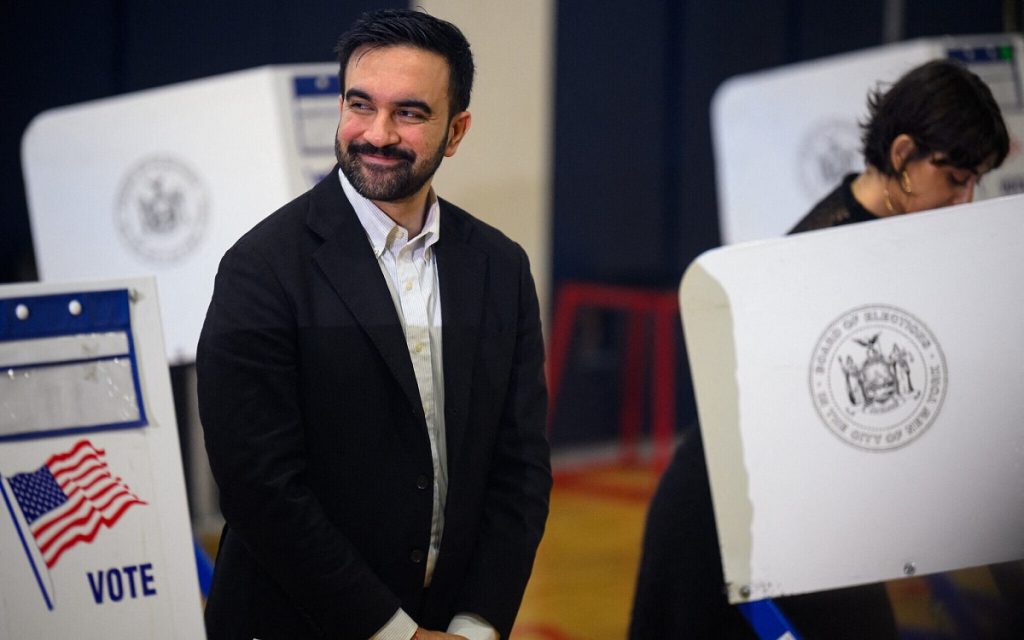
Election data further underscores this influence: Muslims accounted for 14% of votes cast in the 2025 election—double their share among registered voters.
At the local level, the paper reports that demographic change has helped revitalize the economy. Yemeni and Arab business owners have reduced commercial vacancy rates to levels better than those in some upscale Manhattan neighborhoods.
Longtime residents acknowledge that while cultural transformation can generate friction—such as disputes over neighborhood identity—it has also brought economic stability and a renewed sense of belonging.
A “Safe Haven”
Craig notes that Mamdani’s victory was not driven by religious identity, but by a political platform aligned with principles of social justice that resonate with Islamic values.
Many voters—such as worshippers at Darul Uloom School in Queens, the city’s largest and most culturally diverse borough—saw his socialist-oriented policies advocating the right to food, healthcare, and housing as reflections of their religious ethics.
The report adds that even conservative-leaning immigrants who disagreed with Mamdani on policing or business regulation supported him as a protective shield against national political figures who stigmatize their communities.
For these residents, Mamdani represents a “safe haven” and a leader who refuses to apologize for his identity.

Challenges and Future Goals
Still, the Mamdani era faces serious challenges and internal tensions. The Muslim community is not monolithic; while many support his progressive agenda, others in neighborhoods like Morris Park favor a stronger police presence and the preservation of traditional educational values.
According to The Washington Post, Muslim leaders say their expectations go beyond symbolism. They intend to push for guaranteeing the right to pray in public schools, establishing new rules governing police conduct during protests, increasing Muslim representation in city institutions, and reassessing New York’s relationship with Israel.
These demands have raised concerns among some Jewish leaders, who warn against rising anti-Zionism being linked to increased antisemitism—an accusation Mamdani rejects, affirming his opposition to antisemitism.
As Mamdani assumes leadership at City Hall, he carries the hopes of a community that has finally moved from the margins to the heart of power, reinforcing the idea that the only constant in New York is change.
Ultimately, Mamdani’s rise reflects a broader shift in the status of Muslims in New York. After decades of suspicion and targeting, they increasingly see the city as both a refuge and a platform for political participation.