


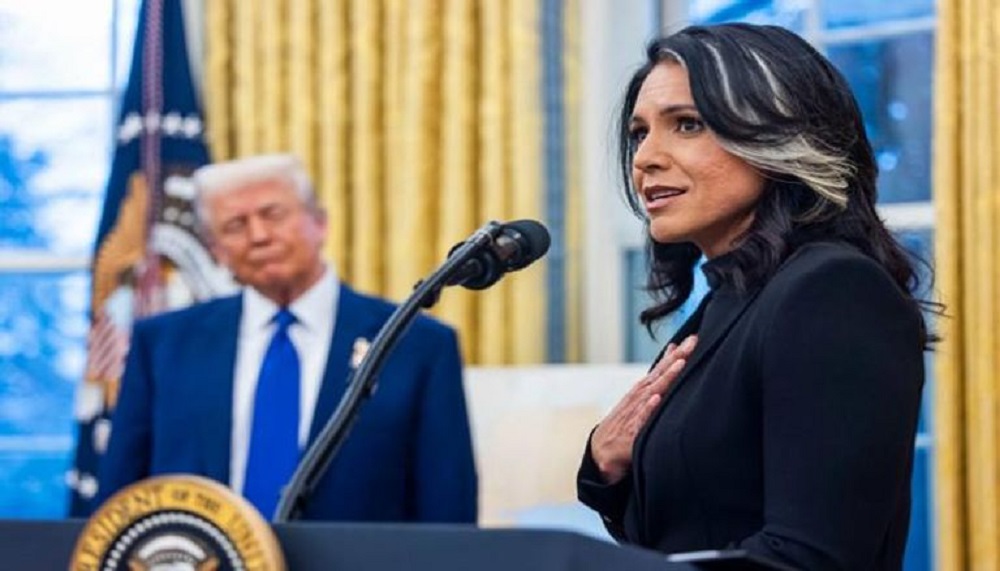
On December 20, 2025, Tulsi Gabbard—Director of National Intelligence in the Trump administration—took the stage at AmericaFest, a conference organized by Turning Point USA in Phoenix, Arizona, to deliver a speech on what she called the “threat of political Islam.” The address quickly evolved into a direct attack on American cities with large Muslim populations, including Paterson, New Jersey.
In her speech, Gabbard described what she termed “Islamist ideology” as “the greatest direct threat to our freedom, in the short and long term,” asserting that it is “a political ideology seeking to establish a global caliphate that would rule us here in America” under Islamic law, and that its adherents “will use violence or whatever means they deem necessary to silence their opponents.”
Up to that point, the remarks could have been dismissed as yet another hardline national security speech. That changed when Gabbard chose to turn Paterson into a dramatic prop in her narrative. In the same segment of her speech, after referencing European and American cities such as Dearborn and Minneapolis, she claimed that this phenomenon “is already happening in places like Houston,” before adding the line that sparked widespread backlash: “Paterson, New Jersey is proud to be the first Muslim city, and they are working to implement their Islamic principles in their government through laws imposed on people or through violence.” With a single sentence, an entire city—with its history and residents—was transformed into an alleged “test case” in an intelligence-driven storyline.
But Paterson has another story. Known as the “Silk City,” it attracted Arab workers and contractors in the early twentieth century, who brought their expertise in textile and silk production to the city’s factories and helped build its modern industrial base.
Over time, that expertise evolved into a network of small businesses, factories, medical clinics, and law offices, as well as a vibrant Arab commercial district that is now among the safest and most dynamic areas in northern New Jersey—visited for tourism, restaurants, and cafés far more than for any search for a “lost caliphate.”
The city’s current mayor, Andre Sayegh, is a Christian Arab American—arguably the most ironic rebuttal to Gabbard’s portrayal of Paterson as the “first Islamic city.” Under his leadership, the city adopted a resolution allowing the call to prayer at sound levels comparable to church bells or the blowing of the shofar, while repeatedly affirming that Muslims are an integral part of Paterson’s social fabric, and that their economic and social contributions are a source of strength rather than weakness.

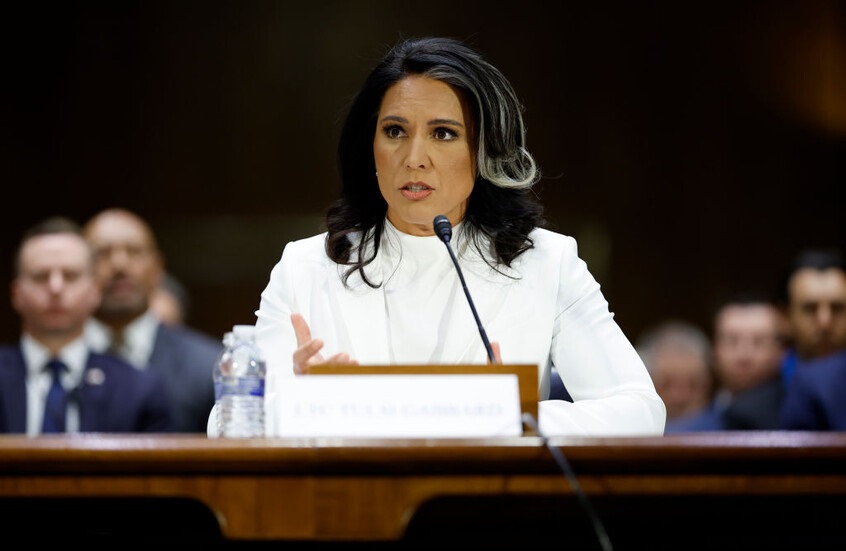
Ironically, Tulsi Gabbard herself did not emerge from the hardline right. She entered Congress in 2013 as a Democratic representative for Hawaii’s 2nd district, gaining prominence as the first Hindu member of the House. She presented herself as an opponent of “regime-change wars” and the excesses of the military-industrial complex, and openly criticized broad policies targeting Muslims under the banner of the “war on terror.”
During Trump’s first term, she denounced his support for the war in Yemen, criticized his alliances with authoritarian regimes, and positioned herself as a defender of victims of U.S. foreign policy rather than its architects.
After leaving the Democratic Party in 2022 and gradually distancing herself from its progressive wing, Gabbard moved closer to right-wing and neoconservative circles. By 2024, she had entered the core of Trump’s campaign, eventually becoming Director of National Intelligence in his second term.
Her AmericaFest speech—with declarations such as “there is no individual freedom under Islamism” and the portrayal of Paterson as a laboratory for imposing Sharia—appeared less like a principled stance and more like a calculated audition for permanent residence in right-wing media ecosystems.
So what changed: the intelligence, or the incentives of power? Did secret reports suddenly reveal that knafeh, fattah, and the aroma of Arabic coffee on Main Street are precursors to an impending “caliphate”? Or did Gabbard discover that the fastest path to political relevance runs through repeating the line “Islamist ideology threatens your freedoms” before an audience eager for such rhetoric? When a politician moves from criticizing Trump’s anti-Muslim discourse to reproducing it—now in an official suit and from an intelligence platform—“opportunism” becomes a gentle diagnosis rather than an insult.
Meanwhile, Paterson’s Arab and Palestinian residents will continue doing what they have always done: running restaurants and shops, educating their children, paying taxes, and welcoming visitors with an extra plate of hummus and a second cup of coffee. In the real Silk City, the only thing imposed on guests is more food and hospitality—not religious laws. For some reason, that is the only “danger” Tulsi Gabbard seems unable to see from the AmericaFest stage.