


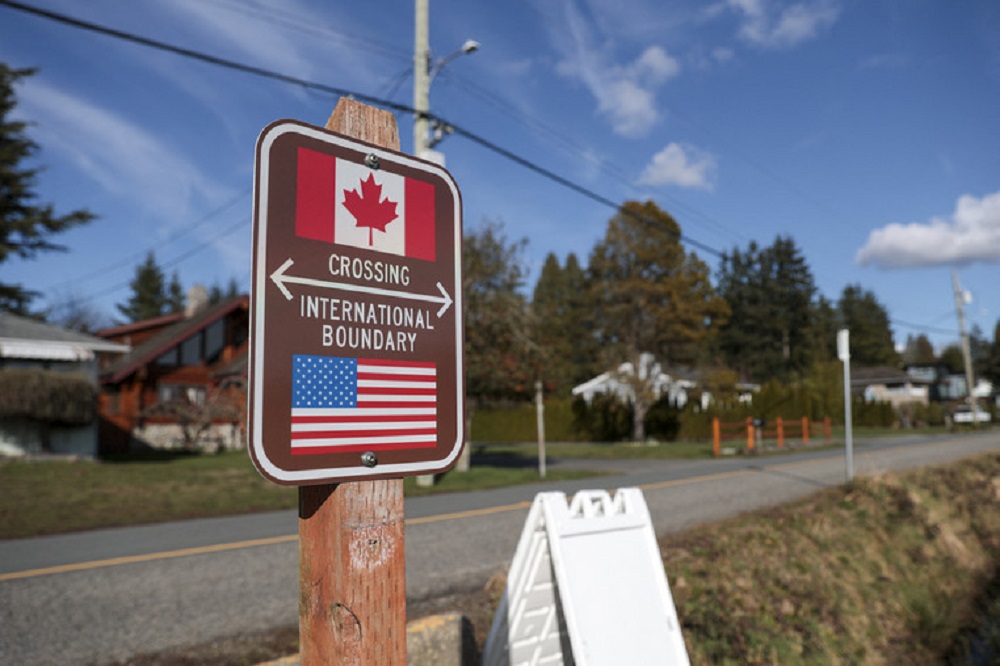
The Canada Border Services Agency (CBSA) has announced the termination of the Remote Area Border Crossing (RABC) program, a long-standing initiative that allowed thousands of travelers—mostly Americans—to enter Canada through remote northern crossings without reporting to staffed border checkpoints, according to Newsweek.
Under a formal statement, the decision will take effect in September 2026. The current permit-based system will be replaced by a mandatory telephone reporting mechanism, requiring travelers to contact Canadian authorities after entering the country.
Beginning September 14, 2026, anyone entering Canada through remote areas of Northern Ontario or from the Northwest Angle into southern Manitoba must either report by phone or appear in person at an authorized port of entry.
Previously, the RABC program allowed travelers with pre-approved permits to cross through designated remote locations without standard inspection procedures. CBSA data shows that approximately 11,000 people use the program annually, with Americans accounting for nearly 90% of participants—making the policy change particularly impactful for U.S. border communities.
CBSA stated that the move is intended to strengthen border security and align Canada’s reporting procedures more closely with those used by U.S. Customs, citing a changing security risk environment and increased scrutiny of non-traditional crossings.
The decision affects several key regions, including the Northwest Angle, the Pigeon River and Lake of the Woods, the Canadian shore of Lake Superior, Sault Ste. Marie, and Cockburn Island—areas where residents rely heavily on cross-border travel for tourism, fishing, property management, and commerce.

CBSA noted that the locations for the new telephone reporting system have not yet been finalized and will be determined in the coming months through consultations with local communities, Indigenous groups, and security agencies. Existing RABC permits will remain valid until September 13, 2026, and failure to comply with the new rules may result in legal action under Canada’s Customs Act.
Meanwhile, several U.S. lawmakers have expressed concern over the economic impact of ending the program. Representatives from Minnesota, Michigan, and North Dakota sent a formal letter to the Canadian government warning that the change could harm local economies, tourism, and small businesses that depend on easy cross-border movement.
Despite these objections, Canadian authorities emphasized that the decision followed a comprehensive internal review and stressed that the transition period is designed to give travelers and communities sufficient time to adapt before full enforcement begins next year.