


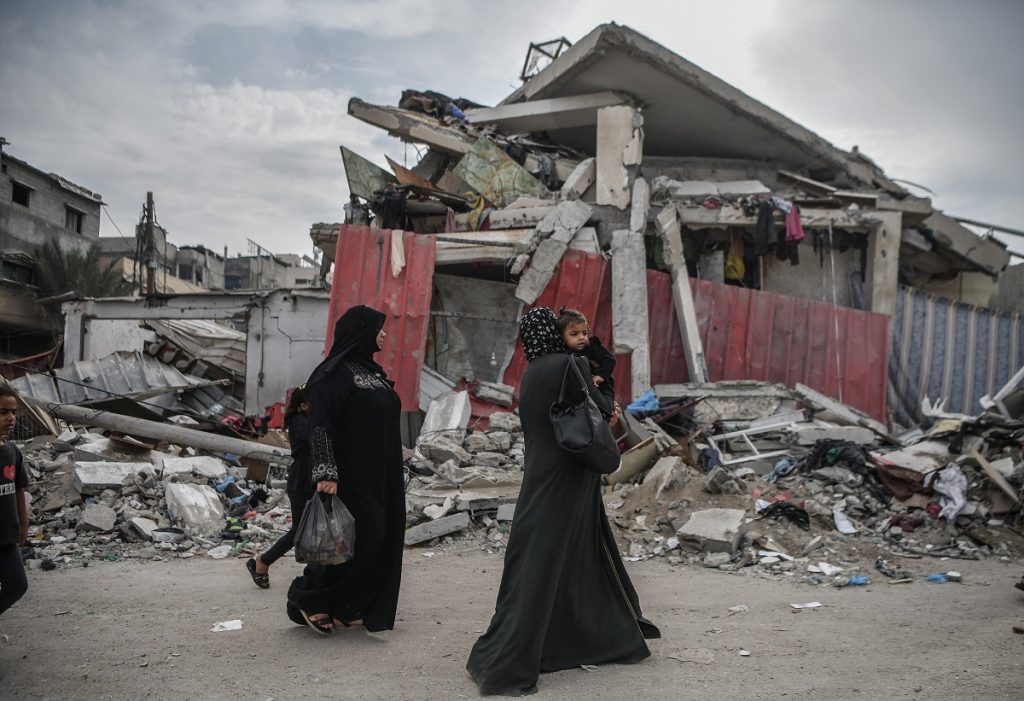
A new U.S. proposal for the reconstruction of the Gaza Strip, known as Project Sunrise, has sparked widespread controversy after being presented within a political and media framework that largely ignores the catastrophic humanitarian reality in Gaza and the root causes of the Palestinian-Israeli war.
According to details published by The Wall Street Journal, Project Sunrise is based on a plan extending over at least 10 years, with an estimated cost of $112 billion. The project aims to transform Gaza into a smart, high-tech city through four phases, beginning in the southern part of the Strip—specifically Rafah, then Khan Younis—and culminating in Gaza City, which is envisioned as a Mediterranean “Riviera-like” showcase.
A Modern City Vision
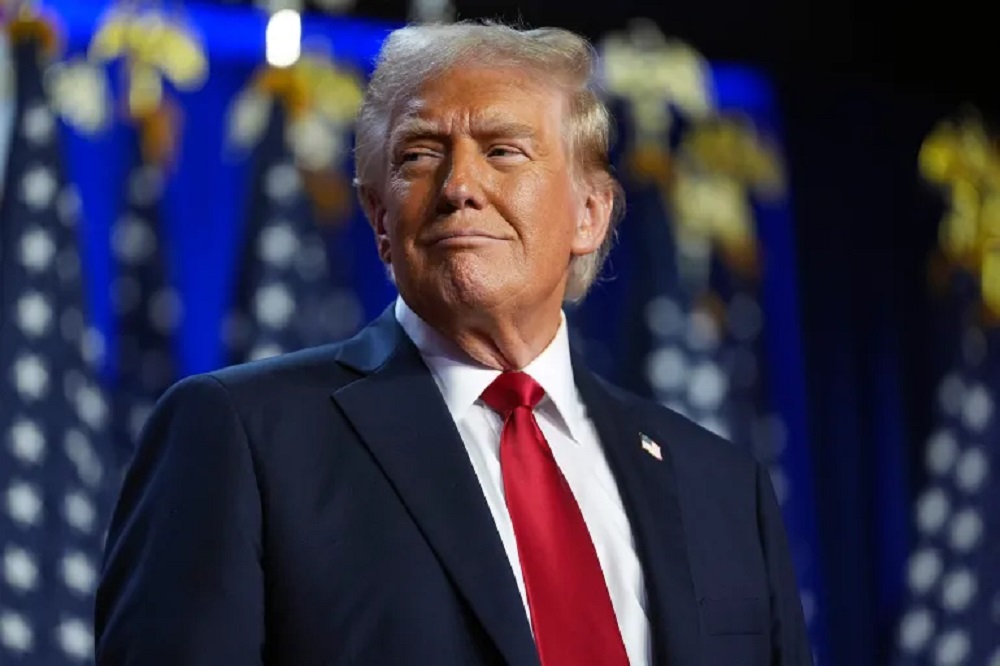
The newspaper reported that a team led by Jared Kushner, former President Trump’s son-in-law, and Steve Witkoff, Trump’s Middle East envoy, drafted a proposal to transform the war-ravaged enclave into a modern, prosperous city.
The 32-page plan includes images of coastal skyscrapers, along with charts and cost tables, and outlines steps to move Gaza’s population from tents to luxury apartments, and from poverty to prosperity.
The plan is described as “sensitive but not classified,” yet it does not specify which countries or companies would fund Gaza’s reconstruction, nor does it clearly explain where the two million displaced Palestinians would live during the rebuilding process.
U.S. officials said Washington has already presented details of the proposal to potential donor countries, including wealthy Gulf states, Turkey, and Egypt.

An Unrealistic Plan
Several U.S. officials who reviewed the proposal expressed serious doubts about its feasibility. They questioned whether Hamas would agree to disarm—a condition for the plan’s implementation—and even if it did, whether the United States could persuade wealthy nations to finance the transformation of a dangerous post-war environment into a technologically advanced city.
Others, however, argue that the proposal offers the most detailed and optimistic vision yet of what Gaza could look like if Hamas laid down its arms and decades of war came to an end.
Steven Cook, a senior Middle East analyst who recently visited Israel but did not review the draft, said:
“They can prepare as many presentations and plans as they want. No one in Israel believes the status quo will change, and everyone is comfortable with that.”
He added: “Nothing will happen until Hamas disarms. Hamas will not disarm—so nothing will happen.”
Trump’s Vision
Officials said Kushner, Witkoff, senior White House aide Josh Greenbaum, and other U.S. officials assembled the proposal over the past 45 days, drawing input from Israeli officials, private-sector figures, and contractors.
They added that if the project moves forward, cost estimates would be updated and reviewed roughly every two years as work progresses.
Supporters of the project insist that leaving Gaza undeveloped while the humanitarian crisis deepens is a far worse option, arguing that realizing Trump’s vision of turning Gaza into the “Riviera of the Middle East” is preferable.
Enormous Obstacles
The plan faces immense challenges. After two years of Israeli bombardment, an estimated 10,000 bodies remain buried beneath 68 million tons of rubble, according to officials. The land is contaminated, filled with unexploded ordnance, and Hamas fighters remain entrenched.
On its second page, highlighted in bold red text, the proposal acknowledges that Gaza’s reconstruction depends on Hamas “disarming and dismantling all its weapons and tunnels.”
Officials in the Trump administration said that if security conditions allowed, the plan could theoretically begin within two months. U.S. Secretary of State Marco Rubio said on Friday:
“You can’t convince anyone to invest in Gaza if they believe another war will break out in two or three years.”
He added: “We are very confident we can secure donors for reconstruction efforts and long-term humanitarian support.”
Phases of Implementation
A roadmap extending over more than 20 years shows that implementation would begin with clearing destroyed buildings, unexploded munitions, and Hamas tunnels, while providing temporary shelters, field hospitals, and mobile clinics for residents.
Once the area is cleared, construction would begin on permanent housing, medical facilities, schools, and places of worship. Roads would be paved, electricity networks connected, and crops planted. Only afterward would long-term goals—such as luxury beachfront real estate and modern transport hubs—be pursued.
Reconstruction would proceed in four phases, starting in the south with Rafah and Khan Younis, then moving north to the central camps, and finally reaching Gaza City.
One slide, titled “New Rafah,” depicts the city as the seat of Gaza’s governance and home to more than 500,000 residents, with over 100,000 housing units, more than 200 schools, 75 medical facilities, and 180 mosques and cultural centers.
Project Costs
The plan estimates the total cost at $112.1 billion over ten years, including public-sector salaries, with a large portion initially allocated to humanitarian needs.
About $60 billion would be financed through grants ($41.9 billion) and new debt ($15.2 billion), with the United States offering to “guarantee” 20% or more of the support. The World Bank would play a financing role.
Costs are expected to decline as Gaza begins generating revenue in the second decade of the plan. The proposal calls for developing 70% of Gaza’s coastline starting in year ten, estimating that this luxury coastline could generate more than $55 billion in long-term investment returns.
Economic Peace
Dr. Mohammed Cherkaoui, professor of international conflict resolution, said the vision is not new, tracing it back to the idea of “economic peace” promoted by Jared Kushner during the Manama conference five years ago, when $50 billion was proposed for development—not to end occupation or resolve the Palestinian cause, but to dilute it through economic projects.
Speaking to Al Jazeera, Cherkaoui said the current plan expands that ambition, assuming the U.S. would contribute about 20% of the funding, while regional states—Qatar, Egypt, Turkey, and Gulf countries—would be expected to provide $80–85 billion, questioning how realistic it is to expect them to fund what he called “Trump’s dream.”
Ignoring Reality
Cherkaoui strongly criticized what he described as a complete U.S. disregard for Gaza’s demographic and political reality, noting that the project treats the Strip as if it were “a land without a people,” despite being home to more than two million Palestinians, amid deep historical, religious, and political complexities that have made the region one of the world’s most intractable flashpoints.
He said that talking about turning Gaza into a hyper-luxurious smart city—while failing to deliver mobile homes, clean water, medicine, and medical supplies, and amid ongoing daily killings—exposes the vast gap between political fantasy and on-the-ground reality.
He described the project as a “Hollywood dream” requiring at least 20 years to move from phase one to phase four, warning that the danger lies not only in its lack of realism, but in what it leaves unsaid: the fate of Palestinians, sovereignty, and occupation.
A New Form of Colonialism
Dr. Hani Al-Masri, director of the Palestinian Center for Policy Research and Strategic Studies (Masarat), argued that Project Sunrise fits into what he called “a new model of colonialism and domination,” one that floods public opinion with glossy visions while obscuring fundamental questions about sovereignty and who would control Gaza’s digital, security, and economic infrastructure.
Al-Masri stressed that any discussion of Gaza’s future that is not tied to self-determination and an end to Israeli occupation is misleading and designed to bypass—rather than resolve—the root causes of the war.
He noted that the plan focuses heavily on disarming the resistance and removing Hamas from power, while remaining largely silent on Israeli withdrawal from Gaza, and even promoting ideas of maintaining buffer zones under Israeli control—concepts he said enjoy U.S. backing.
He also questioned who would truly bear the financial burden, expressing skepticism about Washington’s willingness to pay its declared share, arguing that the U.S. “wants to profit without paying,” and warning that the real danger is saddling Gaza’s population with long-term debt amid humanitarian collapse.
Dark Uncertainty
Both Cherkaoui and Al-Masri warned that maintaining the status quo—or imposing externally driven solutions without Palestinian consent—will only prolong suffering and trap Gaza in a vicious cycle.
They concluded that projects built on political fantasy, without addressing the root causes of the war or recognizing Palestinian rights, may appear impressive on paper but remain detached from reality—at a time when Gaza is enduring one of the worst humanitarian catastrophes in its history.