


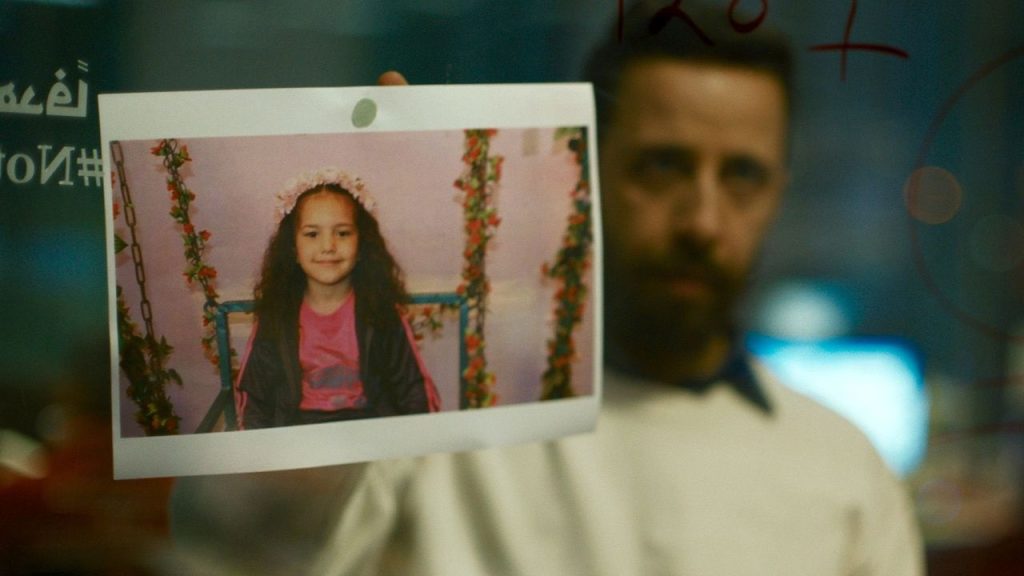
For months, The Voice of Hind Rajab has dominated conversations around Arab cinema. Directed by French-Tunisian filmmaker Kaouther Ben Hania, the film has drawn extraordinary international attention, bolstered by high-profile executive producers and accolades from major festivals. It has been widely promoted as a defining cinematic statement on Palestine, praised for its emotional intensity and political directness.
The film reconstructs the killing of five-year-old Hind Rajab, who was killed alongside her family and the paramedics who tried to reach her in January 2024. Set almost entirely inside the dispatch office of the Palestinian Red Crescent, the narrative unfolds through phone calls and bureaucratic delays imposed by Israeli authorities, capturing a single day of frantic, ultimately futile rescue efforts.
Ben Hania leaves no ambiguity about responsibility. The film names Israeli state violence directly, rejecting the evasive language often used in Western media. This clarity has been celebrated as moral courage. Yet the film’s most powerful tool — the unfiltered use of Hind’s real voice — is also its most ethically fraught choice.
The child’s pleas dominate the film, producing an overwhelming emotional response that allows little space for reflection. Sympathy is not invited; it is enforced. While the director has said her goal was to preserve and amplify Hind’s voice, critics have questioned whether this approach crosses into emotional exploitation. Those concerns have largely been dismissed rather than seriously engaged.


Artistically, the film’s limitations are harder to ignore on repeat viewings. Performances are uneven, the staging feels rigid, and the enclosed format leaves no room for cinematic discovery. More importantly, Hind herself is reduced to a symbol of inevitable death rather than presented as a singular child with a brief, lived life. The film’s structure ensures that her killing defines her entirely.
This approach is not new in Ben Hania’s work. Across her filmography, subjects are framed primarily as victims, while questions of power, authorship, and representation remain unexamined. Formal ingenuity often substitutes for ethical inquiry, shielding the filmmaker from critique.
What is most troubling, however, is the climate surrounding the film. Since its premiere, criticism has been quietly discouraged within cultural and industry circles, framed as disloyalty to the Palestinian cause. This demand for unanimity — especially in a moment of shrinking expressive freedom — is deeply unsettling. No single film should be asked to represent Palestine, nor should political urgency exempt a work from scrutiny.
Despite these reservations, the film may succeed where more complex works fail: reaching audiences previously untouched by Palestinian narratives. Its emotional bluntness may convert viewers who would otherwise remain indifferent. Still, that effectiveness does not absolve it of ethical and artistic shortcomings.
The Voice of Hind Rajab ultimately reflects a broader problem in how Arab cinema is consumed in Western contexts — a preference for immediate emotional shock over sustained, critical engagement. The film calls for discussion, disagreement, and multiplicity of perspectives. Anything less risks turning tragedy into spectacle and silencing the very voices criticism is meant to protect.